Get Full Government Meeting Transcripts, Videos, & Alerts Forever!
Get email alerts on the School Building Feasibility topic
No spam. Unsubscribe anytime.
Athol‑Royalston committee approves $1.3 million from school‑choice fund for high‑school feasibility study
Summary
The Athol‑Royalston Regional School Committee voted to appropriate $1.3 million from its school‑choice account to pay for a feasibility study to explore renovation or rebuilding options for Athol High School; the district expects MSBA reimbursement as bills are submitted and said no town tax or debt exclusion is required.
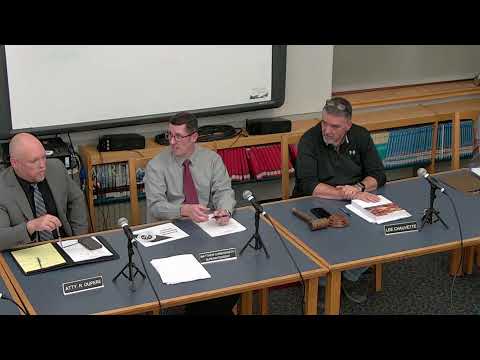
The Athol‑Royalston Regional School Committee on Wednesday voted to appropriate $1,300,000 from the district’s school‑choice fund to pay for a feasibility study examining options to renovate or rebuild Athol High School.
Superintendent stated that “the district will appropriate the full amount of 1.3 million” and that the district intends to submit bills to the Massachusetts School Building Authority (MSBA) as the study progresses so the district will be reimbursed rather than waiting until the study’s end. Officials said the appropriation will come entirely from school‑choice funds, not a town debt‑exclusion vote or direct taxpayer levy.
The feasibility study was described as an 18‑ to 24‑month process that will produce recommendations for the school building committee and the school committee on which projects are viable according to designers and architects. The motion’s language acknowledged that the MSBA is a discretionary program and that any costs exceeding a grant award “shall be the sole responsibility of the district,” and that the appropriation will be reduced by any grant amounts awarded under the feasibility study agreement.
Committee members stressed fiscal controls. A committee member speaking as chair of the pending school building committee said they will hold designers and program managers to the budget and avoid unnecessary extras that could increase study costs. The superintendent said the district had vetted the approach with MSBA, bond counsel and the district’s bond advisor.
Officials also explained a potential downside: if up to roughly $300,000 of local spending were not reimbursed, the district plans to rely on a legislative fix that officials said would remove language restricting use of the reserve fund. That plan was described as contingent on approval by the legislature.
What happens next: the district will notify both towns’ select boards within three days as required by the regional agreement and expects to convene the school building committee publicly to describe the project and the MSBA process in early October. The feasibility study will be conducted under the direction of the school building committee and may lead to later decisions about design and construction. The committee approved the appropriation by voice vote during the meeting.
Provenance: the appropriation was introduced and discussed beginning with the superintendent’s announcement of funding from the school‑choice account and the reading of appropriation language; the subsequent motion and vote took place later in the meeting.