Get Full Government Meeting Transcripts, Videos, & Alerts Forever!
Get email alerts on the Governance Transparency topic
No spam. Unsubscribe anytime.
Residents press for earlier packets as board debates sale of surplus water-district parcels
Summary
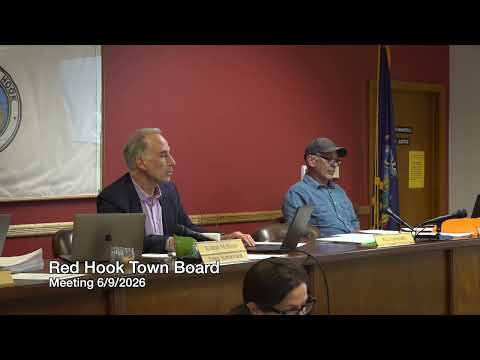
Public commenters pushed the Red Hook Town Board on June 9 to restore public comment to the start of meetings and to release meeting packets earlier; the board also debated authorizing sale of five surplus water-district parcels and whether Community Preservation Fund rules or CPF advisory review should apply.
Public concern about transparency threaded through the Red Hook Town Board’s June 9 meeting, as residents urged earlier packet release and the board wrestled with a request from the water-district board to authorize sale of five surplus district parcels to offset a major water-tower rehabilitation.
Public comment on packet timing and oversight At the start of the meeting, Roxan Fisher urged the board to keep public comment at the beginning of meetings and to ensure meeting materials are released well before meetings so residents have adequate time to review agenda items that could affect votes. ‘‘Dumping massive municipal records on residents with less than two days’ notice still creates an unfair barrier to informed public input,’’ Fisher said, and later asked board members to make the procedural change permanent.
Vincent Deco likewise urged clearer and earlier packet disclosure, citing a summer-camp flyer added to the packet on short notice. Several board members and staff discussed the practical limits of producing a ‘final’ packet given staffing constraints, but agreed to improve addendum labeling on the website and to try to provide clearer notices of what changed between versions.
Water-district parcels and CPF debate The board also considered a June 4 memo from Henry Paris (water-district board) requesting town authorization to sell five district parcels that are no longer operational and were originally acquired for water infrastructure. The water-district board argued proceeds would offset the financing burden for a water-tower repainting and related capital work. The memo stated the five parcels are not operational and that sale proceeds would reduce the district financing needed for the tank rehab.
Some board members and residents expressed concern that using proceeds or processing the sale without review could undercut conservation or local open-space priorities; others said selling surplus parcels that have no operational purpose is a reasonable way to avoid increasing rates for district users. The board discussed whether the CPF (Community Preservation Fund) advisory committee should review the proposal or whether the town should pursue an alternative approach. The board agreed to bring fuller documentation back at the next meeting and to send materials to the CPF advisory committee for review if the board decides to pursue that route.
What happens next: Staff will prepare the necessary application materials and packet addenda for the next meeting, circulate the water-district parcel documentation and CPF-related materials, and invite the CPF advisory committee to review the submission if the board chooses that path.
Why it matters: The decisions will affect water-district ratepayers’ financing burden and set expectations around board transparency and packet availability for residents who rely on advance notice to participate effectively in local government.