Get Full Government Meeting Transcripts, Videos, & Alerts Forever!
Get email alerts on the Budget Transfers topic
No spam. Unsubscribe anytime.
Troutdale council approves year‑end budget transfers after debate over contingency and event spending
Summary
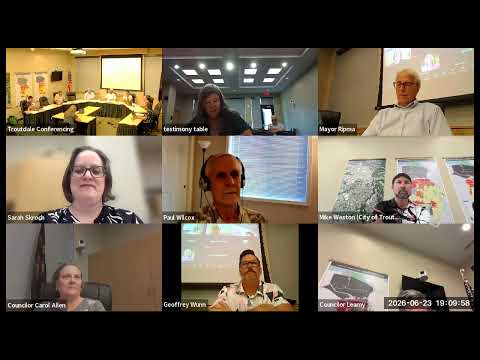
After extended questioning about contingency use and event sponsorships, the Troutdale City Council voted 6–1 to approve year‑end budget transfers and appropriation changes for fiscal 2025–26. Councilors pressed staff on HVAC and sinkhole repairs, an $80,000 street reallocation and why some event sponsorships were recorded as contingency transfers.
The Troutdale City Council voted to adopt a resolution making year‑end budget transfers and appropriation changes for fiscal year 2025–26 after a lengthy staff presentation and council questioning.
City staff said the transfers were largely routine year‑end corrections to move expenditures into their proper categories, and to cover unexpected payroll impacts, temporary labor for a street project, and building repairs. “Local budget law provides for transfers of appropriations within funds,” staff noted during the presentation and said the transfers reflect costs that were not known when the budget was adopted.
Councilors pressed staff for details. They asked why $45,000 went toward HVAC work in the municipal building when additional replacement work remains expected, why a sinkhole repair and related pavement work contributed to a $55,000 pressured line, and why a previously budgeted $80,000 pavement preservation project was being moved between line items rather than paid to a vendor. Staff said the $80,000 movement corrects a category error: the neighborhood crack‑sealing work had been performed internally and must be reflected in the correct street‑fund category for audit compliance.
Several councilors also questioned the practice of using contingency to record council‑approved event sponsorships. Councilors noted a $21,000 community events appropriation and asked why $7,500 for the Mount Hood Jazz Festival and $15,000 for the Cascadia Arts Association Art Walk required contingency transfers. Staff replied that council made those sponsorship decisions earlier in the year and this resolution documents and formalizes the budget entries: “Only council can access contingency,” staff said, and the transfers in this resolution complete that formal authorization.
A number of residents who joined the meeting — both in person and online — asked for clarification on how contingency and reserves work and whether those restricted funds could be applied to other priorities. Staff explained that enterprise funds such as sewer and stormwater are restricted by statute for their specific purposes and do not flow into the general fund that pays for police and fire services.
Councilor White cast the lone dissenting vote. After the roll call, the councilor said the timing and frequency of these year‑end transfers merited closer review: “It’s time. It’s to the point where we got to be more careful,” the councilor said, explaining the vote as a concern about transparency and prior notice.
The resolution was moved, seconded and approved in roll call with six affirmative votes and one no.
What happens next: staff will complete the fiscal‑year closing and present the audited financial statements this fall, which will show final balances and any audit adjustments. The council also discussed bringing more clarity to the budgeting process earlier in the year so the public better understands what was approved and why transfers are required.