Get Full Government Meeting Transcripts, Videos, & Alerts Forever!
Get email alerts on the Section 504 Repair Program topic
No spam. Unsubscribe anytime.
USDA explains Section 504 repair loans and grants for elderly and low-income homeowners in Aliceville
Summary
USDA staff described the Section 504 repair loan (up to about $40,000 lifetime) and the 62-and-older grant (up to about $10,000), eligibility rules, signature-loan exception for amounts up to $7,499, contractor documentation, and the 15-day response rule for missing application materials.
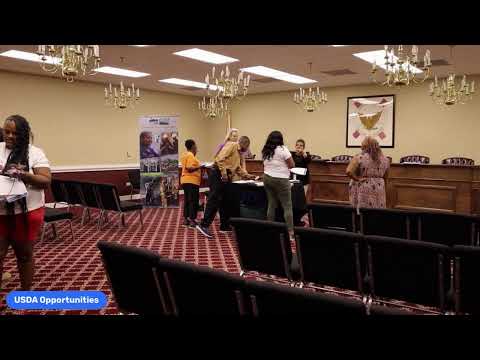
During an outreach visit to Aliceville USDA staff presented details on the Section 504 Home Repair Loan and Grant program and took residents’ questions about eligibility, repairs covered and contractor rules.
The presenter said applicants must own the property to be eligible and that income limits apply; for single-household sizes the presenter cited a low-income threshold mentioned in the session (see clarifying details). The repair loan can be used for health-and-safety and other repairs and carries a lifetime maximum discussed as about $40,000; the 62-and-older grant is limited to health-and-safety repairs and was described as a maximum of about $10,000.
Staff emphasized the difference between loans and grants: loans must be repaid; grants do not. For small loans (discussed as up to $7,499) the office may approve a signature loan without taking a mortgage or charging an appraisal. Loans above that amount require an appraisal and the property value must substantiate the requested loan.
Eligible repairs cited included fixing leaky roofs that produce mold, rotten floors, porch or step hazards, accessibility upgrades such as ramps or walk-in showers for disabled household members, and HVAC improvements where window units are not sufficient to address cold-weather health risks. The presenter gave an example repayment illustration for a $15,000 repair amortized over 20 years with monthly payments described in the session.
The presenter outlined contractor and bid requirements: contractors must itemize labor and materials, list quantities and types of materials and typically provide a copy of their general contractor license for major work; for work under $10,000 an unlicensed relative or local contractor may be acceptable provided the scope avoids required licensed trades (electrical, plumbing, roofing where licensing is required).
Application mechanics: staff said they review initial applications and then send a letter requesting any missing documents; applicants have 15 days from that letter to respond or the application will be withdrawn. Staff urged applicants to submit near-complete applications to avoid automatic withdrawal and to include color photos documenting visible damage. Staff also offered to refer certified packagers to help residents complete forms in their homes.
What happens next: USDA staff said they would stay after the event to take applications and assist residents with follow-up documentation. Residents were encouraged to apply and to use the staff assistance and certified packagers when needed.