Get Full Government Meeting Transcripts, Videos, & Alerts Forever!
Get email alerts on the Facility Improvement topic
No spam. Unsubscribe anytime.
Hilltown Ambulance seeks $50,000 to move crews out of cramped garage and into trailer
Summary
Hilltown Ambulance service director Bailey toured the agency’s Huntington base, described cramped sleeping and training conditions next to live ambulances, and appealed for about $50,000 to buy and install a temporary trailer to improve crew health, privacy and training capacity.
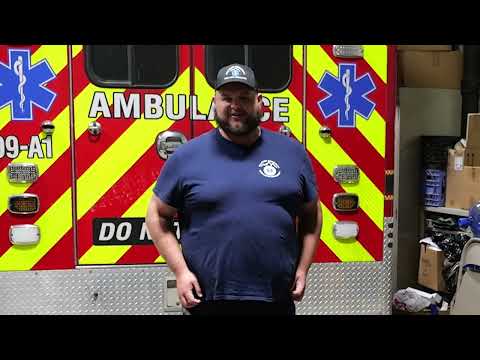
Bailey, service director at Hilltown Ambulance, opened a recorded tour from the agency’s headquarters at One Bramley Road in Huntington and appealed to residents of six towns for help buying a temporary housing trailer.
Bailey said Hilltown staffs a paramedic‑level ambulance around the clock and keeps a second vehicle available for surge or mutual aid, serving Blandford, Chester, Montgomery, Russell, Huntington and Worthington. “We want some separation between our crews and our vehicles,” Bailey said, adding that vehicle exhaust and the lack of private sleeping quarters pose both morale and health concerns: “No one likes sleeping in a garage.”
The tour described a single, multiuse room at the base that functions as sleeping quarters, a training area and a workroom. Bailey said two on‑duty providers share futons and couches in the same space used to store oxygen and other equipment, and that the facility lacks a dedicated area for training and centralized storage, which complicates inventory control and skills maintenance.
As a lower‑cost alternative to remodeling a building, Bailey showed a FEMA‑style temporary housing trailer that the agency and nearby Fire Department staff adapted for ambulance use. The trailer includes two bedrooms (one used for supplies), a living room with seating, a full kitchen with oven, a washer and dryer, and a bathroom with a shower. Bailey said Southampton made minor modifications including security cameras, a radio toning system and an external door camera to improve operational fit.
Bailey estimated the trailer and installation would cost about $50,000 and asked viewers to donate through a link: hilltownulance.org (as provided in the recording) or via a subscription mailer with QR codes to be mailed to residents of the six communities. The presentation closed with thanks to Southampton’s fire leadership and a request for community donations to help raise the stated amount.
The agency described the trailer as intended to provide private sleeping quarters, more effective training space and centralized storage for supplies to support 24‑hour shifts and mutual‑aid operations. Bailey emphasized that improved living conditions would allow crews to rest and train more effectively between calls. The agency did not provide a timeline for purchase or installation beyond the fundraising appeal, nor did it specify whether any regulatory approvals would be required.