Get Full Government Meeting Transcripts, Videos, & Alerts Forever!
Get email alerts on the Municipal Budget Override topic
No spam. Unsubscribe anytime.
Worthington finance committee outlines November override to close $145,527 budget shortfall
Summary
At an informational session, Worthington officials explained two 'pyramid' override options for the Nov. 8 special election that would eliminate a $145,527 shortfall, described tax impacts (about $286.50 per household annually), reviewed the stabilization fund's history, and listed early‑voting dates.
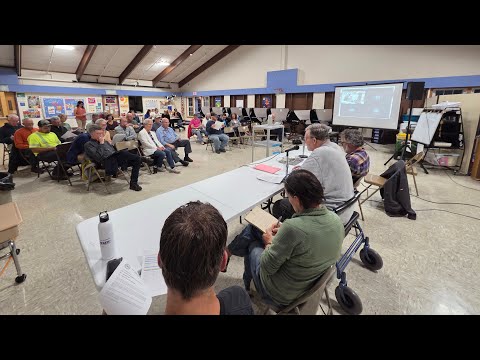
Worthington’s finance committee held an informational session to explain two override questions voters will see on the Nov. 8 special election ballot and to walk residents through the town’s options for addressing a $145,527 budget shortfall.
The presenter said the select board placed two tiered override questions on the ballot: Question 1A would authorize an additional $195,000 in real‑estate and personal property taxes for operating the municipal government and public schools for fiscal 2026; Question 1B would authorize $290,000. The presenter read Secretary of State–recommended ballot language and explained the overrides are “pyramid” questions: if both pass, the higher dollar amount prevails.
“The budget deficit is estimated at $145,527,” the presenter said, while walking attendees through a multi‑year budget table and the handout. He told the meeting both override amounts would eliminate the deficit in the FY26 reconciliation shown in the handout and that, as presented, the two scenarios generate the same levy and tax‑rate figures on the finance table.
On direct household impact, the presenter said the average single‑family tax bill shown in the packet is $5,554.34 and the additional annual tax impact under either override scenario is $286.50. “That number doesn’t fluctuate for either,” he said; he added it is an annual figure residents can divide by 12 to estimate monthly impact.
If an override fails, the presenter explained, the town would most likely hold a special town meeting in late November or early December to balance the FY26 budget. At that meeting, town meeting voters could authorize a transfer from available funds (most likely the stabilization fund) to cover the gap or vote to reduce previously approved appropriations, which officials warned would likely require staff reductions in the school or highway departments.
Much of the discussion focused on the stabilization fund’s history and purpose. Officials reviewed the Department of Revenue (DOR) free‑cash and stabilization‑fund calculations and said state guidance generally recommends using stabilization for one‑time or capital expenses, not ongoing operating costs. The presenter provided a historical reconciliation showing the stabilization fund balance at the close of the most recent annual town meeting as $1,554,174.
Several residents asked how the stabilization fund has been invested and whether returns have kept pace with inflation. One resident said, “With $1.5 million there, for each percentage point under inflation that’s $15,000 of lost purchasing power,” and asked for a five‑ or ten‑year rate‑of‑return history. Officials said the treasurer maintains investment details (part is in the Massachusetts Municipal Depository Trust and part is held with an external manager) and that they would provide the figures later.
Fire and capital needs were another recurring topic. John Sullivan, who identified himself as representing the Worthington Fire District, and Fire Chief Mike (identified in the meeting) described the rising cost of apparatus and equipment: officials noted a recent vacuum tanker cost roughly $360,000 (the town contributed about $80,000 and the balance came from a federal grant) and that a modern combination ladder/pumper could be $750,000–$800,000 in coming years. Speakers said these capital pressures are part of the argument for maintaining a sizable stabilization fund.
Speakers debated how large stabilization should be. Some residents urged creating a multi‑year capital plan (an inventory and replacement schedule for vehicles and buildings) so the town would have a defensible target for the stabilization balance; presenters said parts of such planning exist but efforts to procure a comprehensive buildings assessment produced no bids.
Officials also addressed whether the finance committee or select board could recommend a vote. Committee members noted campaign‑finance rules limit elected bodies’ use of town funds for advocacy; they said individual members may state personal recommendations at informational meetings but the town cannot conduct paid advocacy. One finance committee member said their personal view was to support the override but emphasized that any public recommendation must follow state rules.
Voting logistics were announced: early in‑person voting runs Oct. 20–Nov. 7, Monday–Friday, 10 a.m.–1 p.m. at Town Hall; vote‑by‑mail is available but requires contacting the town official who handles absentee/mail ballots and the town is discouraging it as more costly to administer. The special election is Nov. 8; the presenter read the ballot question hours shown in the packet (poll hours were noted on the handout).
The session closed with officials urging residents to review the handout and attend the October informational follow‑up. No formal vote was taken at the meeting; if the override passes the levy limit will be adjusted upward permanently (the presenter explained Prop. 2½ mechanics), and if it fails the town will present options to town meeting to balance the budget.
The finance committee said it will provide additional documentation requested during the session — notably the stabilization‑fund returns and a more detailed inventory of capital needs — before the next informational meeting on Oct. 4 at 9 a.m. at the school, and reminded residents of the Nov. 8 special election and the early‑voting window.