Get Full Government Meeting Transcripts, Videos, & Alerts Forever!
Get email alerts on the Ambulance Dispatch topic
No spam. Unsubscribe anytime.
County official warns proposed ambulance dispatch changes would hinder local emergency response
Summary
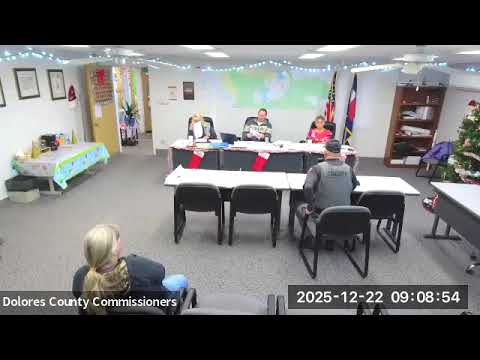
At the Dec. 22 Dolores County meeting a county official urged keeping dispatch local, saying a requested RFP and proposed channel/EMD changes could slow response times, increase staffing costs, and create safety risks; the board agreed to pursue a post‑holiday workshop with the ambulance board and local agencies.
A county official told the Dolores County Board of County Commissioners on Dec. 22 that proposed changes to ambulance dispatching and a recent request for proposal risk undermining local emergency response and could cost the county more in staffing and training.
The speaker said the RFP submitted by the ambulance board president, Joyce Barnett, and apparently drafted by ambulance chief Damian Smith, would require procedural changes — including Emergency Medical Dispatch (EMD) certification and different radio‑channel monitoring — that the county does not currently meet. “We have never charged the ambulance ever,” the official said, adding that requirements in the RFP “would cost our county quite a bit more money.”
Board members and speakers raised several operational concerns. The county official said moving dispatch to an outside center reduces local geographic knowledge and can delay responses: speakers recounted examples including a rock slide near Slick Rock and a misrouted call that added 10–15 minutes. The official also cited an approximate annual cost of $11,000 the county pays for shared Cortez dispatch services and said the county lacks EMD‑certified dispatchers. “You would have to have two dispatchers 24 hours to be EMD,” the official said, and multiple participants said that meeting EMD and 24/7 staffing standards could require at least three additional full‑time dispatchers with benefits.
Speakers also raised a unit‑identification dispute: the ambulance reportedly began using call signs such as “Medic 61/62,” while state registration shows “Medic 1” and “Medic 2.” Participants warned that non‑unique or conflicting call signs create a liability and complicate incident command; one speaker noted that unique identifiers are an NFPA (national) standard for incident management.
The county official urged writing to the ambulance board (rather than the ambulance chief) to clarify expectations and preserve local dispatching. Board members agreed a workshop after the holidays — including the ambulance board, nearby fire departments and other emergency‑service governing boards — would be the next step to address the RFP, staffing questions and radio‑channel concerns.
No formal policy change was adopted at the meeting; the board directed staff to arrange a workshop and pursue further conversations with the ambulance board and regional partners.