Get Full Government Meeting Transcripts, Videos, & Alerts Forever!
Get email alerts on the Tourism Economy topic
No spam. Unsubscribe anytime.
Visit Savannah tells council tourism fuels $4.1B economy; members press for clearer governance and equitable benefits
Summary
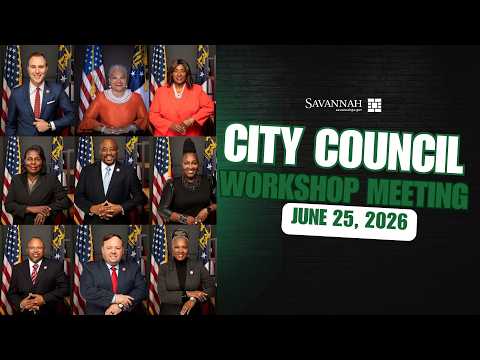
At a Savannah City Council workshop, Visit Savannah presented its annual strategy, saying 13 million visitors generated about $4.1 billion in 2025 and supporting roughly 27,000 jobs. Councilors pressed the organization on governance, DEI outcomes and how tourism revenues are shared with community partners.
Visit Savannah outlined how it markets the city and how bed-tax dollars support that work, while council members pushed for clearer lines of accountability and broader local benefits.
Joe Marinelli, chief executive of Visit Savannah, told the council the destination-marketing organization is the Savannah Area Chamber of Commerce business unit contracted to use hotel-motel tax dollars to promote Savannah, Chatham County and Tybee Island. Marinelli said Visit Savannah’s operating budget (including Visit Tybee and the sports council) is about $19 million and that an estimated 13 million visitors came to the region in 2025, producing roughly $4.1 billion in local spending.
"If we build a place where people want to visit, we'll have a place where people want to live," Marinelli said, describing a strategy built on year-round marketing, data-driven targeting, partnerships and frontline service standards. He said Visit Savannah devotes more than 90% of its budget to sales, promotions, marketing and personnel, and that the organization’s work is structured under Georgia state rules and overseen through its board and the Chamber.
Why it matters: Marinelli and staff said tourism taxes underwrite a broad share of local projects and services — including SPLOST-funded capital — and that visitor spending supports jobs and tax revenue countywide. Council members said those economic benefits make clarity about governance and equitable distribution of visitor-driven benefits essential.
Council questions and clarifications
Several council members asked where policy and governance decisions are made when Visit Savannah’s marketing appears to shape development, hotel growth and event scale. "Where's the governance and accountability come from from our end?" a councilor asked during a question-and-answer period.
Marinelli replied, "We're actually not making policy. Our job is to take the product that is presented to us and sell and market that." He said Visit Savannah participates in the Tourism Advisory Committee and works with city events staff, the Chamber and other partners to align events and promotions with city capacity and priorities.
On inclusion: councilors praised growth in African-American visitation and sought evidence that tourism spending is creating opportunities for Black-owned businesses and for historically underrepresented neighborhoods. Marinelli said Visit Savannah has added social-inclusion language to its agreement with the city, has worked to diversify its board and marketing, and uses interest-based targeting to reach travelers with specific cultural or experiential interests.
On DMOs and local grants: Councilors pressed how destination marketing organizations (DMOs) are designated and funded. City staff explained that hotel-motel tax dollars are distributed by jurisdiction; Visit Savannah is Savannah’s contracted DMO and therefore receives the city’s portion of bed-tax revenue. Port Wentworth and other municipalities may designate different local DMOs funded from taxes generated within their boundaries. Councilors also asked how the Savannah Area Black Chamber (the city’s Black Chamber) is supported; staff said that the Black Chamber receives a separate annual city grant (about $50,000) and performs related economic-development work alongside its DMO activities for Port Wentworth.
Requests and next steps
Council members asked Visit Savannah and city staff to produce more detail on how marketing decisions intersect with zoning, event permitting and infrastructure demands — and to expand partnerships that route economic benefits to diverse local businesses. Councilors also discussed reviving visitor ambassador programs and other operational supports for safety and cleanliness in high-traffic areas.
What’s next: Visit Savannah’s leadership left council with its mid-year business-plan and outreach metrics for follow-up, and council members requested additional reports on workforce and inclusion outcomes, funding agreements with partner organizations, and potential ambassador or safety programs.
Sources: Presentation and Q&A at the Savannah City Council workshop; statements attributed to Joe Marinelli and city staff.