Get Full Government Meeting Transcripts, Videos, & Alerts Forever!
Get email alerts on the Zoning Cannabis topic
No spam. Unsubscribe anytime.
Planning board hears proposal to rezone Broad Hollow dispensary for adult-use cannabis
Summary
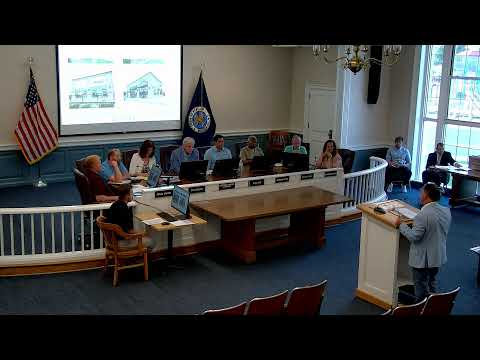
The Town of Babylon Planning Board held an informational hearing on June 29 on The Botanist’s request to rezone a Broad Hollow (Route 110) site from E business to G industry to permit an adult‑use retail cannabis dispensary. Board members probed parking, security and operations; the hearing was closed with decision reserved.
The Town of Babylon Planning Board held an informational hearing June 29 on an application by The Botanist to rezone a parcel on Broad Hollow (Route 110) from an E business district to a G industry district to allow conversion of an existing medical cannabis dispensary to an adult‑use retail operation.
The applicant’s counsel, Gerard Glass, told the board the site has operated as a medical cannabis dispensary since 2019 and that the application seeks rezoning by the Town Board plus variance relief from the Zoning Board of Appeals for setbacks, parking and lot area. Glass said the site plan would largely remain unchanged while the owner transitions the use and implements corporate security and inventory controls.
Why it matters: rezoning is required before the applicant can seek the special-use permit and parking variances needed to operate as an adult‑use retailer. Neighbors and the board typically focus on parking, security, hours and whether exterior or traffic changes will affect adjacent properties.
Glass described operational details in a presentation packet the board received and referenced an Exhibit B summarizing the relief requested. He said hours would match other approved dispensaries — Monday through Saturday 9 a.m. to 9 p.m., Sunday 10 a.m. to 8 p.m. — and estimated total staff of 15–20 with about five employees on site during busy periods. Deliveries, he said, would be scheduled at off‑peak times and conducted with small vehicles rather than tractor‑trailers; Glass also said the business would not maintain overnight on‑site storage beyond inventory in secure storage rooms.
On security, Glass said the operator uses seed‑to‑sale inventory tracking, reinforced vaults, interior and exterior high‑definition cameras, intrusion detection, panic alarms and employee training. "They have systems that they've generated in connection with their other locations... it's a pattern," he told the board, arguing the firm’s multi‑site experience yields consistent procedures. He added, more bluntly, "corporate America's got their fingers in this because it's a money pot, obviously," a characterization he framed as an explanation for standardized, repeatable security systems.
Board members asked detailed questions about how adult‑use inventory processes would differ from prior medical operations, how controlled access would operate with the floor plan (including a side entrance and security booth), and whether entrances or double doors would be magnetically controlled. Glass confirmed controlled customer entry, restricted employee areas and electronic access systems but said he would supply more detail on inventory processing if the board wanted specifics.
Parking emerged as the most tangible planning issue. Glass acknowledged the site has 15 parking spaces and that the project will require a parking variance. He said employees currently park off‑site under an informal arrangement with a neighboring restaurant that has underused spaces and that the applicant would pursue alternate leased or cross‑access spaces if needed. The board noted that the informal arrangement is not a legally binding parking agreement and could be revoked, and Glass acknowledged that contingency planning or formal agreements may be required as conditions of approval.
Glass also reviewed the variances listed in the planning department’s denial letter (front yard, rear yard, parking, lot area), asserting that the variances are largely technical given the property’s long history as a retail cannabis location. The board referenced a June 23 planning memo from Commissioner of Planning Denise Graziano; Glass said he had reviewed that memo with his client and did not flag additional items at the hearing.
The meeting record shows no public commenters spoke on the item during the hearing. After questioning and discussion, the chair moved to close the informational hearing and reserve decision for later review to allow the board and other review bodies time to consider the planning memo and any follow‑up materials. The motion was made "by Dan" (as recorded) and seconded by Julianne; the board voice‑voted in favor and the chair closed the public portion. The record will remain open for written comments and application documents are available at the Planning Department in the West Wing of Town Hall or by contacting planning at (631) 957‑3103 or planningcomments@townofbabylonny.gov.
Next steps: rezoning must be considered by the Town Board; if rezoned, the applicant will need a special‑use permit and parking variances from the Zoning Board of Appeals. The Planning Board reserved its decision and may revisit the application after receiving additional documentation or written public comment.