Get Full Government Meeting Transcripts, Videos, & Alerts Forever!
Get email alerts on the Land Use topic
No spam. Unsubscribe anytime.
Council reviews set of proposed minor zoning updates including cannabis odor mitigation and car‑detailing allowances
Summary
Planning staff presented six proposed minor policy updates to Bloomington’s zoning code — including a 150‑foot odor‑mitigation requirement for certain cannabis uses, a new car‑detailing use allowance in industrial zones, and clarifications to tree preservation and trailer parking rules — and sought council direction to bring formal ordinances forward this fall.
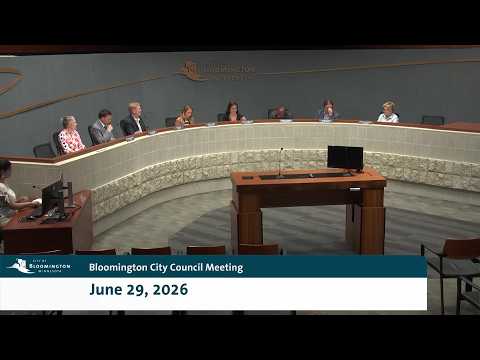
Planning staff presented a study item on June 29 outlining six minor policy updates to the city’s zoning code and sought council input before bringing formal ordinance language forward.
Dakota Castaneda summarized the principal items: (1) formalizing odor mitigation standards for cannabis cultivation and manufacturing when exhaust points are within 150 feet of residential dwellings (measured from the exhaust location to the nearest dwelling wall), with staff recommending retail be excluded except in limited on‑site consumption cases; (2) creating a distinct use allowance and definition for car detailing, permitted in B2, I1, I2 and I3 zoning districts to allow appointment‑based, low‑throughput detailing uses; (3) reconsidering a strict 50% ground‑floor transparency requirement in B4/C5/LX districts and whether to retain flexibility; (4) clarifying tree preservation applicability to include missing‑middle residential lot types in R1, R1A and RS1 districts; (5) reverting trailer parking rules to allow side/rear yard parking (grass or driveway) subject to setbacks; and (6) codifying basic rezoning application content (form, fee, narrative and required plans) to set clearer expectations for applicants.
On cannabis odor mitigation, staff explained the 150‑foot measurement would be from the building exhaust location to the nearest residential dwelling and noted the rule would mirror how the city treats restaurant odors. Council members generally supported applying mitigation to cultivation and manufacturing uses while excluding ordinary retail where no exhaust odors are expected, though they asked staff to consider exceptions where on‑site consumption is permitted.
Councilors raised implementation and enforcement questions — for example, how mobile car‑detailing or home‑business services would be treated, and whether adding application requirements to code would limit staff flexibility. Planning staff said many of the proposals mirror current practice and that further refinement and public hearings would follow before codification.
Why it matters: These updates are procedural but affect business permitting, neighborhood impacts, and enforcement. Staff plans to return with formal ordinance language and public hearings in the fall.