Get Full Government Meeting Transcripts, Videos, & Alerts Forever!
Get email alerts on the Transportation topic
No spam. Unsubscribe anytime.
I‑494 Corridor Commission says commuter services convert thousands of solo drivers, estimates large emissions savings
Summary
Melissa Madison, executive director of the I‑494 Corridor Commission, told the Bloomington City Council that commuter services convert about 5,700 solo drivers into sustainable commute modes three or more days per week and estimated roughly 56 million vehicle miles avoided annually as a result of outreach and employer engagement.
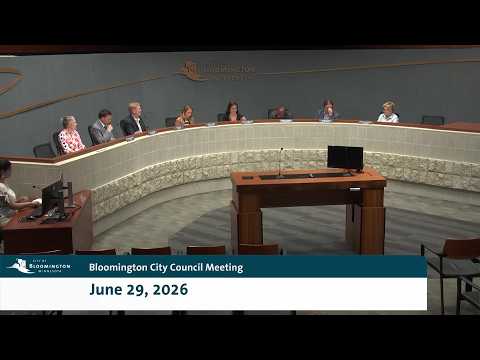
Melissa Madison, executive director of the I‑494 Corridor Commission, told the Bloomington City Council on June 29 that the commission’s commuter services program works with employers and commuters across five cities to reduce single‑occupant vehicle trips.
Madison said Bloomington’s membership dues amount to about $55,000 annually and noted the commission spends roughly 95% of its budget on demand‑management programs such as employer outreach, transit pass enrollment, telework resources and carpool matching. “We are able to convert about 5,700 drive‑alone commuters into a sustainable commute mode three or more days per week after they receive assistance from us,” Madison said.
Madison described the program’s employer services — commuter fairs, customized transit information and preferential carpool parking — and said the commission conducts more than 100 commuter fairs annually. She also highlighted a safety net for commuters: “The Metropolitan Council provides 100 free taxi or rideshare trips per year as a safety net for people who use an alternative to driving alone to work,” Madison said.
Madison cited the commission’s internal survey results and a modeled impact estimate: “That 5,700 people equals an estimated 56,000,000 vehicle miles avoided annually,” she said, adding that the reduction translates to roughly 23,000 metric tons of CO2. The commission also tracks conversion from driving alone to alternative modes at frequencies ranging from one day per week up to full‑time modal shifts.
Council members asked about the interaction between the commission’s work and the MnDOT HOV/bus rapid transit project on I‑494. Madison said MnDOT has set aside $2,100,000 for transportation demand management (TDM) related to the project and that commission staff are competing to receive some of that funding to support education and incentive efforts tied to the bus/HOV investments.
Why it matters: Bloomington’s investment in regional commuter services aims to reduce congestion and greenhouse gas emissions while leveraging employer partnerships and multimodal incentives. The council received the update as informational; Madison offered to return with additional data if the council wanted further detail on post‑construction projections.