Get Full Government Meeting Transcripts, Videos, & Alerts Forever!
Get email alerts on the Holly House Eir topic
No spam. Unsubscribe anytime.
Los Altos study session on Holly House draft EIR: consultant says demolition studied to fully disclose impacts; public urges reuse
Summary
At a June 23 study session the city’s consultant presented the draft environmental impact report for the Holly House (Redwood Grove), explaining demolition was used as the project's description because it is the most consequential action to analyze; public commenters urged adaptive reuse, cited cultural connections and asked for stronger preservation emphasis. Public review runs through July 27, 2026.
Aone Danielson, the principal EIR consultant working for Los Altos, led a study session June 23 to present the draft Environmental Impact Report for the Holly House at Redwood Grove Nature Preserve and to explain why the document treats demolition as the project's "stable, finite project description." Danielson said that under state practice and case law the EIR must study a single project outcome and that demolition was selected because it "has the greatest potential to have impacts that need to be disclosed." He added: "we picked the most consequential so that those effects could be fully disclosed."
The draft EIR, published June 11 and on public review through July 27, evaluates demolition and four broad alternatives: no project (status quo), relocation of the structure, full rehabilitation and reuse, partial rehabilitation/partial demolition, and mothballing (stabilization to defer decisions). The report identifies significant, unavoidable cultural‑resource impacts if demolition proceeds — archival documentation or photographic mitigation does not eliminate the loss of a historic resource under the California Environmental Quality Act (CEQA). The consultant also identified biological resource concerns (including bats and special‑status species) and the likelihood of hazardous materials (lead paint and asbestos) that would require standard abatement measures if any construction proceeds.
Public comment at the session focused on preservation and community history. Maria Bautista told the council the EIR’s project framing appears to favor demolition and does not give adaptive reuse equal weight; she also urged explicit recognition of the site’s links to Japanese‑immigrant history. John Bear, president of Friends of Historic Redwood Grove, and several other commenters proposed reuse scenarios (youth education center, small performance space, lease or long‑term partnership models and fundraising by a "Friends of Holly House" group) and said the EIR should more thoroughly examine feasible uses. Speakers asked specific questions about selling or leasing the building, salvaging architectural elements, and asbestos surveys.
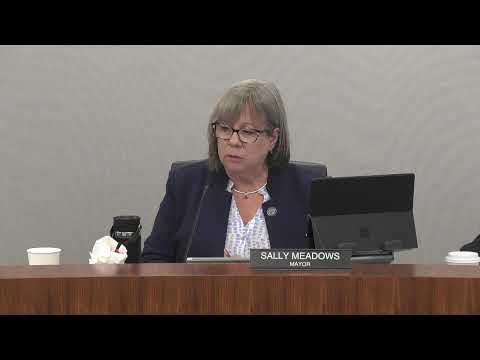
The consultant and staff noted that the draft EIR includes alternatives and mitigation measures but that the purpose of the study session was informational: "we are making no decisions," Mayor Sally Meadows said at the start of the meeting. The draft document and the public‑comment record will be used to prepare a final EIR and written responses to substantive comments. Written comments are due July 27 at 5:00 p.m. and may be submitted via the project webpage.
What’s next: the city will accept written comments through July 27, prepare responses and any necessary text revisions in a final EIR, and then the item will return to the council when the environmental record is complete and the city has to consider an eventual decision about demolition, rehabilitation, relocation or other actions.