Get Full Government Meeting Transcripts, Videos, & Alerts Forever!
Get email alerts on the Downtown Parking Ordinance topic
No spam. Unsubscribe anytime.
Los Altos council sends citizen‑sponsored downtown parking‑plaza ordinance to November ballot after report warns of legal and housing risks
Summary
After receiving an Elections Code §9212 analysis, the Los Altos City Council voted unanimously June 23 to submit a citizen‑sponsored ordinance that would restrict changes to 10 downtown parking plazas to the November 3, 2026 ballot. Consultants warned the measure contains undefined terms, an indemnity clause obligating the city to cover legal defenses, and could complicate the city’s certified housing element.
The Los Altos City Council voted 4–0 on June 23 to place a citizen‑sponsored "Los Altos Downtown Parking Plazas" ordinance on the November 3, 2026 ballot after receiving an Elections Code §9212 report that identified potential legal, fiscal and planning risks.
Consultants Jeffrey Bradley and Stephanie Hager presented the report, which concluded the measure would constrain future options for redevelopment of the listed plazas, include undefined terms (such as "availability," "access" and "convenience") that raise administrative and legal ambiguity, and could interfere with the city’s ability to meet state housing‑element commitments. The consultants estimated the measure could reduce potential revenue opportunities and complicate infrastructure and stormwater improvements tied to redevelopment.
Why it matters: the ordinance would lock in voter approval as the decision pathway for conveyance, use changes, or other actions affecting 10 specified downtown parking plazas. Because the plazas are identified as housing‑opportunity sites in the city’s housing element, the report said the measure could require the city to find replacement capacity or risk state review of its housing element and related penalties.
A central legal concern raised during council questioning was an indemnity provision in the citizen ordinance draft. The city attorney read section 10 aloud for the council: "The city shall indemnify the proponents for reasonable expenses in any losses incurred by the proponents as agents in defending the validity and implementation of the challenged measure," and added that the clause would require the city to pay defense costs if the initiative is litigated. Council members asked who "the proponents" are (the city attorney said they are the individuals who filed the initiative) and how broadly the obligation could extend to appeals. The report and council discussion flagged that litigation expenses could be substantial and that prevailing plaintiffs in land‑use litigation can also be awarded fees in some circumstances.
Consultants also flagged ambiguity about plazas 7 and 8. The draft initiative contains language that appears to exempt development of plazas 7 and 8 "for affordable housing," but the same APNs for those plazas appear in the initiative’s list of covered parcels, creating uncertainty about whether a truly 100% affordable project — or a development with a single manager unit — would qualify for the exemption.
Public comment was sharply divided. Supporters of the initiative argued voters should decide uses for downtown plazas and defended the right of residents to weigh trade‑offs; opponents and multiple speakers warned the measure’s drafting risks expensive litigation, indemnity exposure, and possible disruption to the city’s housing plan (the consultants noted the plazas represent roughly eight acres identified in the housing element, and the housing element lists about 124 units across those sites). Several speakers also noted that some parcels identified by APN are only partly owned by the city.
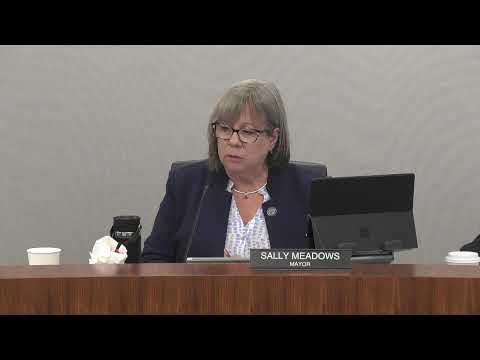
Council action: Mayor Sally Meadows moved — and the council seconded and approved — a resolution submitting the citizen‑sponsored ordinance, without alteration, to the November 3, 2026 general election and directing the city attorney to prepare an impartial analysis and set rules for ballot arguments. The motion passed unanimously (Council members Daly, Weinberg, Lang and Mayor Meadows voted yes).
What’s next: The city will ask the Santa Clara County Registrar of Voters to place the measure on the November ballot, publish the impartial analysis prepared by the city attorney, and accept post‑election legal challenges if they arise. The council also directed staff to plan a study session to review contingency zoning and housing responses should the measure pass.
Vote at a glance: Council vote to submit ordinance to the November 2026 ballot — 4 yes, 0 no (Daly, Weinberg, Lang, Meadows).