Get Full Government Meeting Transcripts, Videos, & Alerts Forever!
Get email alerts on the Land Use topic
No spam. Unsubscribe anytime.
Local planning agency backs Hollywood Beach comp-plan changes; joint board votes to deny amid public concerns
Summary
The Local Planning Agency voted 3-2 to recommend three comprehensive-plan amendments that set a policy framework for a Hollywood Beach overlay, hotel-room density bonuses, and a transfer-of-development-rights program. After public testimony about missing materials and preservation risks, the joint board cast a separate 5-3 recommendation to deny the package.
Hollywood Beach, Fla. — On June 28 the citys Local Planning Agency voted to recommend transmittal to the City Commission of three comprehensive-plan amendments intended to enable a future Hollywood Beach overlay that would allow height and density bonusing under specific conditions. The Local Planning Agency (LPA) approved each of the three elements by 3 to 2, while a concurrent joint meeting of the Historic Preservation Board and LPA subsequently recorded a separate joint recommendation to deny the package, 5 to 3.
Staff presented the amendments as three policy-level components: (1) changes to the citys flexibility-unit rules; (2) establishment of a Hollywood Beach hotel density bonus program tied to public benefits such as publicly accessible open space and dedicated parking; and (3) a citywide transfer-of-development-rights (TDR) framework with sending and receiving areas to be defined later in zoning code. "The commission directed staff back in March to do an economic feasibility analysis of the beach area," Andrea Winget, director of development services, told the board, urging members to treat the vote as a policy decision that would be implemented through later zoning text changes.
Why it matters: The amendments would create the legal framework that lets the city later adopt zoning rules to allow additional hotel room density or height in targeted parts of the beach if developers meet public-benefit requirements. Staff said the approach responds to an economic feasibility study showing that certain redevelopment will not be viable under existing rules without measurable incentives; it also reflects state statutory constraints (including reference to SB 180) that limit how localities can change certain standards.
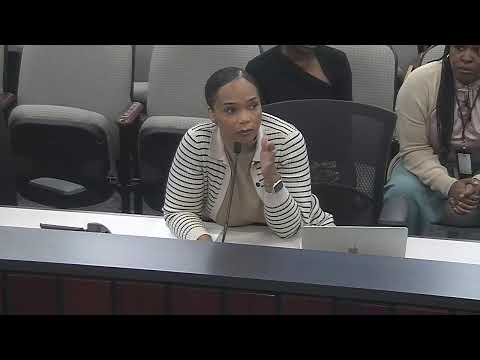
Public speakers and board members raised concerns about timing, document availability and historic preservation. Anne Ralston, a lifelong resident who spoke during the presentation comment period, said, "This is not the charming beach we used to love," and urged the boards not to diminish existing protections. Several residents and the president of the Hollywood Historic Society argued the documents provided to the public and to board members were incomplete or distributed too late for meaningful review. Steve Welsh, a public commenter, said the community faced "a total information blackout" and urged conditional or delayed action so the boards could protect historic assets.
Procedural outcome and next steps: The LPA (the statutorily required review body for comp-plan amendments) approved transmittal of the flexibility-unit modification, the hotel density bonus, and the TDR framework by individual 3-2 votes and will forward those recommendations to the City Commission. If the commission approves the transmittal at first reading, the package would be transmitted to state review for a 30-day period before adoption hearings. Separately, the joint boards 5-3 motion to deny will be included in the record and transmitted to the commission for consideration.
Staff emphasized that the comprehensive-plan amendments establish policy "shells" that authorize future zoning changes but do not themselves set exact height limits, sending/receiving maps for TDRs, or detailed eligibility criteria. Cameron Palmer, the citys chief planner, said those specifics "are determined in the zoning text" and are legally required to return to the board for review and recommendation before adoption.
The meeting drew extended debate about whether the boards had sufficient notice and sufficient detail to make a reasoned recommendation. Some members asked that the city schedule a workshop to examine blank or placeholder slides and to provide clearer detail on how height, density and sending/receiving areas would be limited in the zoning stage. Staff said the next step is to draft zoning and land-development regulations that will be brought back to the LPA and the Historic Preservation Board for review and public hearings.
The meeting adjourned with staff and board members acknowledging additional public outreach and future hearings would follow.