Get Full Government Meeting Transcripts, Videos, & Alerts Forever!
Get email alerts on the Broadband topic
No spam. Unsubscribe anytime.
Local telecom professional urges Wahoo to pursue buried, future‑proof fiber and coordination with utilities
Summary
A Wahoo resident with telecom experience told the council that buried fiber and resilient, modern PON architectures (XGS‑PON) will better serve the community than aerial drops and older DOCSIS/GPON builds, and urged follow-up with the utilities committee and providers about redundancy and service‑level agreements.
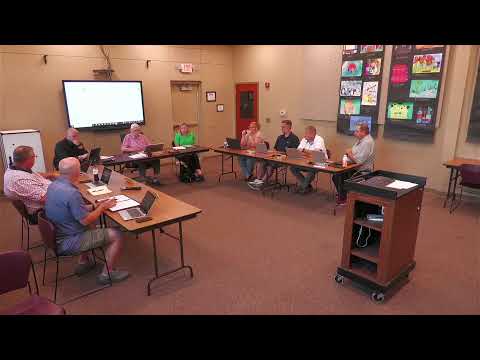
A resident who identified himself as Daniel and said he has more than 15 years in telecom presented to the Wahoo City Council on June 23 about broadband infrastructure best practices and resiliency. "I'm a huge advocate of fiber," Daniel said, and urged future‑proofing the network by using newer PON architectures such as XGS‑PON rather than relying on aging coax or minimally provisioned GPON.
Daniel argued that buried drops are more resilient than aerial drops in Midwest weather and that how head ends and cabinets are sited affects redundancy across neighboring communities. He discussed build steps (site survey, design/engineering, permitting, construction) and noted that once a PON architecture is built it can be costly and difficult to upgrade for many years. He also raised practical concerns about drop burial depth and locate practices, noting that typical drops are often placed 6–8 inches deep while some residents prefer 18 inches for protection.
Council discussion focused on what the city can require when providers use public right‑of‑way. A council member noted recently enacted legislation narrows the city's discretion over permit review timing and technical requirements for builds in the right‑of‑way; the transcript does not identify specific statutes. City staff and council discussed whether the utilities committee should open a line of communication with Unity or other providers to clarify resiliency, service‑level agreements and locate processes.
Daniel offered to connect the city with consultants and vendors and said he could help gather technical information about SLAs and architecture options. He emphasized that cost and operator economics drive some providers toward aerial drops, but that the city holds leverage because of local demand and the potential for leasing or building municipal fiber in other jurisdictions that have pursued that approach.
Next steps: council members suggested the utilities committee and staff meet with the presenter and, if appropriate, representatives from providers to better understand build plans, burial practices, redundancy and SLAs. The transcript records no formal direction or vote to adopt technical requirements.