Get Full Government Meeting Transcripts, Videos, & Alerts Forever!
Get email alerts on the Fire Assessment topic
No spam. Unsubscribe anytime.
Accenture consultant briefs Tequesta on fire‑assessment options; council leans toward filing resolution of intent
Summary
An Accenture consultant explained non‑ad valorem (fire) assessments — legal tests, two methodologies (historical demand and availability), data needs and a study timeline of about 90–120 days — and council signaled interest in filing a resolution of intent to preserve the tax‑bill option while deferring any final decision.
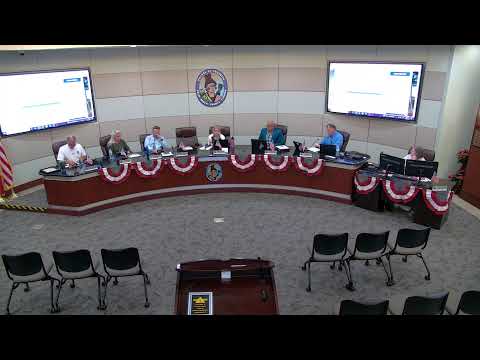
An Accenture consultant told the Village of Tequesta council on June 29 that the municipality could use a non‑ad valorem fire assessment to fund fire protection services, but doing so requires a legally defensible methodology, careful public outreach and adherence to statutory deadlines.
Sandy Newbarth of Accenture said a defensible assessment must meet two legal prongs: (1) the charge must provide a special benefit to the properties charged, and (2) the cost must be fairly and reasonably apportioned. She described two court‑approved methodologies: the widely used historical‑demand approach (which looks at fire protection calls over one to three years and assigns per‑unit rates) and an availability methodology (a two‑tier method combining a per‑parcel time‑in‑service charge and a protection‑from‑loss charge based on structure value).
Sandy said the study typically takes 90–120 days after staff provides requested data and estimated that a study would cost about $30,000 with implementation costs around $8,500. She explained collection options (tax bill, separate bill, utility bill), legal publication and notice requirements, and key deadlines if the village wants to use the county tax bill (for example, adopting a resolution of intent by Jan. 1 of the year the assessment would be placed on the tax bill and adopting the final assessment resolution before the tax roll certification date around Sept. 15).
Council members expressed concerns about the local profile (small parcel counts and heavy EMS call volumes), how vehicle/roadway and mutual‑aid calls would be treated, the use of building market values (not taxable value) if the availability method is used, possible exemptions (institutional, veterans, hardship) and the political optics of a charge that may appear “like a tax.” Sandy emphasized that EMS costs would be excluded from the fire assessment and that the assessment is limited to the fire‑protection portion of the budget.
After discussion, several council members supported taking the low‑cost next step Sandy offered: filing a resolution of intent or placing the village on her notification list so the village would preserve the option to use the tax bill and have template language available if the council decides to move forward. No final implementation vote was taken; staff was directed to prepare draft resolution language and to return for additional workshops and public outreach.