Get Full Government Meeting Transcripts, Videos, & Alerts Forever!
Get email alerts on the Diversity Inclusion topic
No spam. Unsubscribe anytime.
Mashpee Diversity, Inclusion & Belonging committee outlines community outreach, seeks partnership with schools and town
Summary
Marie Stevenson and liaison Marie Blackburn presented the MDIB committee's history, projects and limits (advisory role and constrained funding), and proposed joint work with the school committee on needs assessments, crisis response and youth engagement.
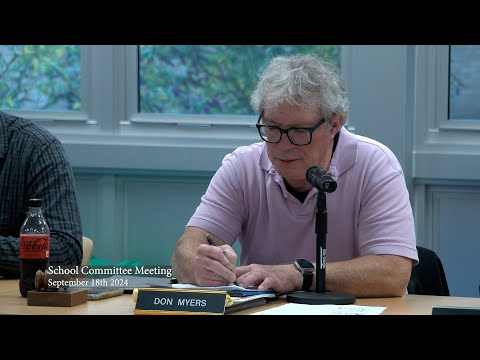
Marie Stevenson, chair of the Mashpee Diversity, Inclusion & Belonging (MDIB) committee, and Marie Blackburn, the town's liaison to the Barnstable County Human Rights Advisory Committee, briefed the Mashpee School Committee on the committee's history, current projects and resource needs.
Stevenson said the committee originated from an earlier "No Place for Hate" effort and reconstituted after community incidents in the mid'2010s. "We were one of the first (committees on Cape Cod) and the work has included Race Amity Day, the Who We Are project and student engagement," she said.
Blackburn described the county human-rights commission's mission and her role as a local liaison, offering a referral pathway for residents who need help identifying the right agency for complaints or resources. "If you have people in the community in your school system who have problems and you need some resources you can reach out to me," she said, offering contact materials for the committee.
Committee members asked how the MDIB committee could better connect with the school district and the broader town government. School committee members and MDIB representatives discussed conducting a needs assessment, coordinating a joint meeting, improving visibility of MDIB resources and instituting a crisis-response plan that brings together town agencies and school officials when incidents occur.
Both presenters emphasized that MDIB is an advisory group without adjudicatory authority and that funding is limited. Stevenson said the committee receives a small allotment from the Human Services Department and noted past grant support from the Massachusetts Cultural Council. "We are volunteers," she said. "We have to go out and find the money to do our projects."
The school committee agreed to explore a joint work session to define shared objectives, better publicize MDIB functions and consider ways to integrate the committee's initiatives into district planning and outreach.