Get Full Government Meeting Transcripts, Videos, & Alerts Forever!
Get email alerts on the Budget 26 2138 topic
No spam. Unsubscribe anytime.
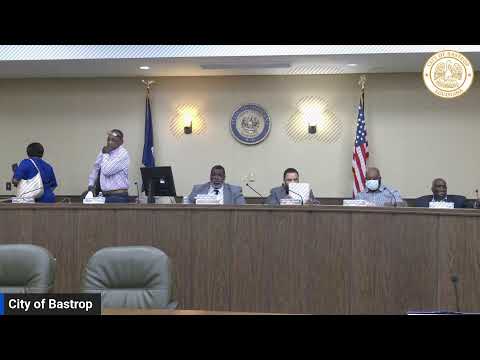
Bastrop council adopts sewer budget, delays final general‑fund vote after hours of line‑item questioning
Summary
Council adopted the sewer fund resolution and then spent most of the meeting probing the proposed general‑fund budget — questioning balance‑sheet entries, materials and demolition lines, esports revenue, overtime tracking and police staffing — and scheduled a finance work session to finalize outstanding items before the June 30 deadline.
The Bastrop City Council on June 23 moved to adopt Resolution 26‑2137, the operating budget for the sewer fund for FY 2026–27, after staff explained minor balance‑sheet corrections and the reasons to adopt budgets before June 30 to avoid recurring audit findings.
A staff presenter told the council that adopting budgets early avoids a recurrent audit finding and that several small amendments were corrections to balance‑sheet reporting rather than changes to appropriation. The presenter said the corrected beginning fund balance for the sewer fund should be reflected as $10.4 million on the attached balance sheet.
On a roll‑call vote during the meeting the council recorded affirmative votes and approved Resolution 26‑2137. (Roll‑call entries in the transcript record several councilmembers voting “Yes” in sequence.)
Council then turned to Resolution 26‑2138, the proposed general fund budget for FY 2026–27. Staff described the proposed budget as balanced and largely a “stand‑still” proposal that funds public safety at prior levels and excludes one‑time recurring revenues. Councilmembers pressed for more line‑item clarity and for supplemental documents including a personnel report sorted by department so members can verify how many employees are budgeted in each department and how related benefits are applied to salary lines.
Members raised multiple specific concerns and questions: why some material and supplies lines jumped from small original budgets to much larger projected amounts in the current year (staff said historical anomalies and reclassification explained many of the shifts); why demolition expenditures were amended in prior quarters (staff said those entries would be clear in the Q4 close‑out report); and how esports and athletics revenues were estimated (staff said estimates were conservative and would rely on registration fees and sponsorships; one example donation mentioned but not guaranteed).
A recurring procedural issue dominated discussion: the administration presented more granular line items (separating overtime from base salaries) so councilors can track overtime in real time; some councilmembers objected that reallocating overtime could mask staffing shortfalls, while staff said the change fixes earlier monitoring problems and gives the council better tools to hold departments accountable without creating hidden pots of money.
Police staffing and recruitment also drew sustained attention. Chiefs reported current patrol staffing (roughly eight officers on duty with one entering academy training) and said the department needs additional officers to reach full patrol coverage. Council discussed recruiting incentives, adjusting age limits as a recruitment tool and creating a feeder/training program. Staff and chiefs said recruitment, retention and targeted incentives would be pursued but cautioned money is only one factor.
Because multiple councilmembers said they still needed time to review line‑item questions and to see Q4 actuals, the council scheduled a finance work session before the next regular meeting so members can reconcile outstanding items and avoid having to readvertise the budget if changes exceed the 5% amendment threshold for a fund.