Get Full Government Meeting Transcripts, Videos, & Alerts Forever!
Get email alerts on the Ordinance 26 4285 topic
No spam. Unsubscribe anytime.
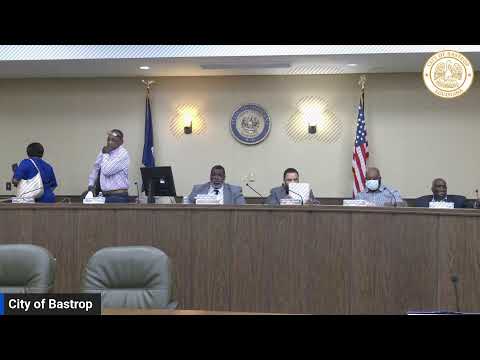
Bastrop council narrows proposed occupational‑license revocation measure after weeks‑long debate
Summary
After extended public comment and council debate, Bastrop council amended Ordinance 26‑4285 to require a council majority for suspension or revocation of an occupational license and to clarify due‑process steps; supporters said it adds enforcement tools, while critics warned of subjectivity and legal risk.
The Bastrop City Council on June 23 amended a proposed ordinance that would expand grounds for suspending or revoking business (occupational) licenses to include certain “beautification” and environmental violations, and voted to advance the measure after adding a provision reserving final decision authority to the council.
Supporters — including council members and staff who advocated for the change — said the ordinance fills a gap in the city’s enforcement toolkit by making chronic environmental and property‑maintenance violations possible grounds for license suspension or revocation while preserving due process. A staff presenter told the council the change “does not remove due process” and described the existing notice, administrative conference and appeal steps that lead to adjudication or remediation.
Public comment included a call for enforcement of existing code and clearer public notice before new penalties are added. Public commenter Charlie Rapid urged transparency in both enforcement and budgeting, saying the community deserved clear access to amended budgets and enforcement outcomes.
Several council members said they supported giving the city additional tools to gain compliance with codes but raised concerns about vague language. One council critic asked how “beautification” would be defined and cautioned it could invite legal challenge if the standard were left subjective rather than specified in the municipal code. The presenter and other speakers pointed to definitions that exist in title 6, chapter 2 of the city code and said the ordinance would tie the new license grounds to those existing definitions.
Council debate also centered on procedure after an alleged violation is found. Several council members said they wanted the council — not an individual executive official — to retain the ultimate authority to approve a remedy or uphold a suspension. In response, council members moved to amend the ordinance’s language so that any suspension or revocation “shall occur by affirmative majority vote of the mayor and board of all the persons” and then voted to strike the mayor from that provision, leaving the decision with the council. (The final adopted amendment requires a council majority; the precise text is available in the council packet.)
Supporters described the change as a measured compliance tool that would rarely be used but could be necessary for repeat or flagrant violators. Opponents warned that expanded grounds paired with broad terms like “beautification” risked arbitrary enforcement and additional litigation; staff repeatedly said that any enforcement action would follow the procedural steps in state and local law, including notice and an opportunity to be heard.
The council approved the ordinance as amended on a roll‑call vote. The ordinance now proceeds to implementation steps identified by staff; council members said they expect additional clarifying amendments may follow to tie the new violation categories explicitly to code sections used by code enforcement.