Get Full Government Meeting Transcripts, Videos, & Alerts Forever!
Get email alerts on the Budget topic
No spam. Unsubscribe anytime.
Lynn Haven asks staff to study consolidating city services amid budget pressure; commissioners vow to protect core public safety
Summary
Facing a tight FY27 outlook, the Lynn Haven Commission directed staff to evaluate options for consolidating general-fund services and report cost proposals, while multiple speakers urged keeping police and fire off any consolidation list.
The Lynn Haven City Commission unanimously approved Resolution 2026-06-559 directing the city manager to evaluate opportunities for consolidating services, prepare cost proposals, and report back to the commission for review.
City staff framed the resolution as a response to significant fiscal pressure: an earlier draft budget showed a major deficit and the commission seeks potential savings ahead of possible November ballot measures affecting ad valorem revenue. "We are looking at a very, very lean and mean budget this year," the city manager said, noting staff will explore municipal partnerships and private-provider options.
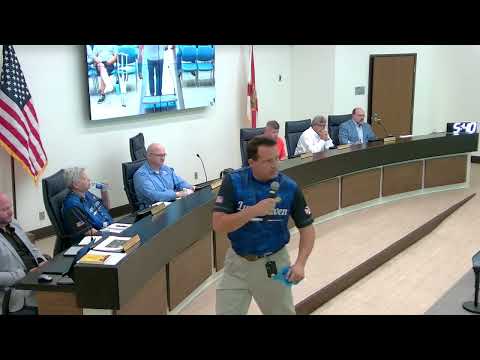
Multiple commissioners and residents warned against including core public-safety functions in any consolidation. During public comment, Ryan Scrape described touring Fire Station One and said Lynn Haven units typically reach some medical calls five to 10 minutes before county rescue units. "I don't think that's what we want for our community," Scrape said, urging the commission to leave police and fire off the table except as a last resort.
Resident Mr. Basher noted Lynn Haven’s millage rate (about 4.0) is lower than Bay County’s (about 6.8) and cautioned that county-level consolidations could still reduce service levels because county budgets will be stretched as well. Other commenters urged transparent, quantified estimates of how consolidation would affect response times and service levels before any decision.
The commission and staff agreed to study a wide range of options — from modest operational changes to possible interlocal agreements — and return with specific cost projections and implementation risks. The resolution passed on a 5–0 roll-call vote.