Get Full Government Meeting Transcripts, Videos, & Alerts Forever!
Get email alerts on the Municipal Finance topic
No spam. Unsubscribe anytime.
Willow Park council directs staff to pursue up to $6 million tax note for road repairs; seeks water grants
Summary
Council instructed staff to pursue a tax note of up to $6 million to fund repair of existing streets and authorized an amended HB500/TWDB grant application (cap up to $10 million) to pursue water-line replacements; council and staff stressed coordination to avoid tearing up roads twice if state or federal water funding is awarded.
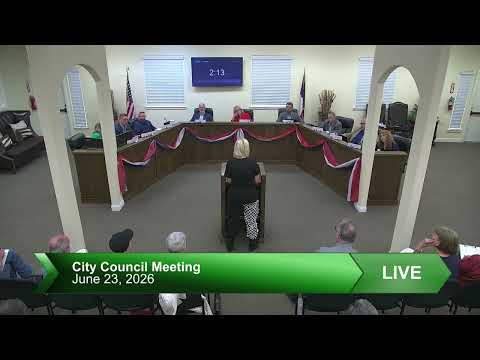
Willow Park city leaders on June 23 instructed staff to pursue issuance of a tax note of up to $6 million to fund repairs of existing streets, and approved an amendment to the city’s House Bill 500/Texas Water Development Board grant application to increase the project cap the city may request.
The council’s direction authorizes city staff to prepare and pursue a seven‑year tax note that city consultants said could fund roughly $6.35 million of road work while keeping the city under its debt-cliff constraints. Eric Mah of Hilltop — the finance consultant who spoke to council — said the city’s existing debt schedule creates capacity to support the proposed issuance while keeping the tax rate stable when scheduled declines in current debt occur.
Council and staff said the tax note would be limited to repairs on existing streets within Willow Park, not new development roads, and that the city would try to coordinate any road projects with prospective state and federal water funding so work on streets would not be undone by later water-line replacements. City staff said they are applying to the Texas Water Development Board under House Bill 500 and will seek up to the program cap applicable to Willow Park’s population (staff referred to a $10 million cap for the city’s population bracket) so the city could include additional water-line work if awarded.
Consultants described the practical trade-offs: tax notes must be repaid within seven years and carry higher annual debt service compared with longer-term certificates of obligation, but they leave room to lower the tax rate and avoid a long-term debt cliff. Eric Mah told the council his group used conservative interest-rate assumptions and a sample seven-year repayment schedule to show the city could support a roughly $1.06 million annual debt service payment under the structure they presented. City finance staff (Jake) and public-works staff (Chase) briefed the council on water-fund cash limitations and the need for grant funding to make large water-line projects affordable without drawing heavily on the water fund.
Council members debated whether to identify specific streets now or keep the purpose language broad to accommodate shifting needs if grant dollars arrive. Staff recommended preparing project lists and amounts by July 21 so banks could be solicited in time to bring an approval item to the council on an August meeting; that timing would preserve the ability to set the tax-note financing before the tax-rate process.
The motion to instruct staff to pursue the tax note passed in open session; the council also approved a separate motion amending the resolution for the HB500/TWDB application to increase the cap to the $10 million maximum allowed for the city’s population bracket.
Next steps: staff will refine the list of projects and amounts and return to council with documents for bank solicitation and a proposed financing timetable. If the city is awarded state or federal water funds, council discussed coordinating the use of those grants with the road work to avoid repeated excavation of newly repaired streets.