Get Full Government Meeting Transcripts, Videos, & Alerts Forever!
Get email alerts on the County Budget topic
No spam. Unsubscribe anytime.
County approves chair's FY27 budget for TSCC review amid public pleas to restore services
Summary
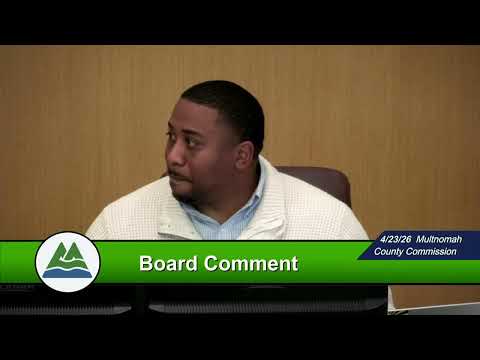
The Multnomah County Budget Committee approved the chair's proposed FY27 budget for submission to the Tax Supervising and Conservation Commission despite extensive public testimony urging restoration of mental-health, shelter and animal-services funding and several commissioners proposing targeted amendments.
The Multnomah County Budget Committee voted to approve the chair's proposed fiscal year 2027 budget and directed staff to submit the document to the Tax Supervising and Conservation Commission (TSCC) to meet the state-mandated May 15 deadline.
Christian Elkin, the county budget director, told the board the motion to approve does not equate to final adoption and reminded commissioners that later budget adoption gives the governing body the authority to amend specific line items. "Approval of the budget of the proposed budget accomplishes an important step in the budget process," Elkin said, including meeting Oregon budget law deadlines.
Public testimony at the hearing was extensive and focused chiefly on proposed cuts and the potential for layoffs. Jackie Tate, president of AFSCME Local 88, urged the board to "prioritize maintaining the highly skilled and culturally competent staff who actually provide the critical services" and warned that layoffs will lead to service erosion and higher long-term costs. Multiple commenters cited management and consultant spending (speakers cited a unit they called "SPARK" with a cited cost of about $3.9 million) and urged restoring direct-service positions instead of expanding executive staff.
Several front-line staff and community providers told the board reductions would damage early-childhood mental-health services and culturally specific gun-violence behavioral health supports. Adolfo Jimenez, who identifies himself as a Spanish-speaking mental-health consultant on the gun-violence response team, asked commissioners to restore program 40080B from 3 FTE to a minimum operating model of 5 FTE that would include a supervisor, administrative operations support and culturally specific mental-health consultants.
Commissioner Brim-Edwards placed three amendments on the table: raise tobacco retail license fees (to move toward cost-recovery for the health department), add one geographic information systems FTE for the elections division (funded by a communications office reallocation), and restore $170,654 and one FTE to the animal enrichment program by reducing one vacant management analyst position in the SPARK unit. Brim-Edwards described the animal enrichment restoration as intended to reduce animal stress and improve adoptability.
The committee approved the budget for submission; roll-call votes were recorded. Commissioners asked staff to prepare follow-ups, including detailed transition plans where services face reductions (notably shelter-bed reductions and changes to pre-trial services), and to provide additional budget detail at upcoming work sessions and hearings.
The committee ction clears the document for the TSCC review step; final adoption, amendments and legal authority to spend will occur at a later scheduled meeting.