Get Full Government Meeting Transcripts, Videos, & Alerts Forever!
Get email alerts on the Water And Sewer Rates topic
No spam. Unsubscribe anytime.
Manassas Park consultants warn FY2027 water revenue shortfall; alternative rate design would shield small users
Summary
Consultants told the City of Manassas Park on June 16 that the water fund faces a large FY2027 revenue gap and projected a 41% revenue increase for water (22% for sewer) under the current design; an alternative meter‑size fixed charge plus tiered volumetric rates would limit median‑bill increases but shift costs to large users.
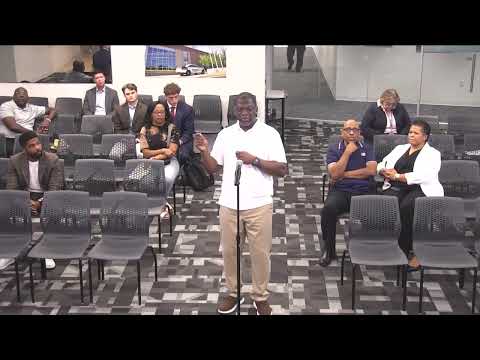
Consultants from New Gen Strategies and Solutions presented a five‑year water and sewer rate study to the City of Manassas Park governing body on June 16, warning of a significant revenue shortfall in FY2027 under current rates.
Connor Dukus, the study’s senior consultant, summarized the projection: "This would require a 41% increase in revenue for FY2027 followed by four years at 3%." The study attributed the shortfall largely to rising wholesale costs and planned capital spending, and it assumed the city would continue a roughly $2 million annual transfer from the utilities to the general fund unless the council directed otherwise.
The firm modeled two rate designs. Under the current structure, the consultants estimated a large one‑time revenue bump (41% water, 22% sewer) would be needed in FY2027 to avoid multi‑year shortfalls in cash reserves. Under an alternative design that differentiates the fixed monthly service charge by meter size and introduces a four‑tier inclining volumetric rate for residential users, the median customer’s combined water and sewer bill would rise far less: "the median customer would only see a 4% increase in their combined bill under the alternative rate design compared to the 28% under the current rate design," the consultants said. That alternative shifts a greater share of costs to large residential and commercial users.
Council members asked about key assumptions and implementation options. Officials pressed consultants on wholesale cost growth, the composition of the $2 million transfer to the general fund, and whether the transfer could be reduced. Consultant analyses showed a high‑level indirect cost allocation could lower that transfer (two high‑level methods produced allocations of about $800,000 and $1.3 million), but the presented rate models did not assume any reduction to the $2 million transfer.
Council members also explored options to phase increases, execute mid‑year adjustments, or delay projects to reduce upfront rate shock. Consultants said phasing scenarios could be modeled (for example, a two‑year scenario that spreads increases) but noted compounding effects and the need to preserve reserves and capital funding. Staff and council asked the consultant for follow‑up details, including a more granular indirect cost study, the list of large commercial customers, and a multiyear phasing analysis.
The presentation was informational only; no rate ordinance or increase was adopted at the meeting. City staff and council indicated they will return with follow‑up analyses before any formal action.
What happens next: staff will work with the consultant to run additional scenarios (phased increases, indirect cost studies and potential mid‑year adjustments) and provide more detailed customer‑impact tables and lists of large commercial accounts for council review. The council emphasized a desire to limit rate shock for small users while ensuring long‑term revenue sufficiency for capital and debt service.