Get Full Government Meeting Transcripts, Videos, & Alerts Forever!
Get email alerts on the Short Term Rentals topic
No spam. Unsubscribe anytime.
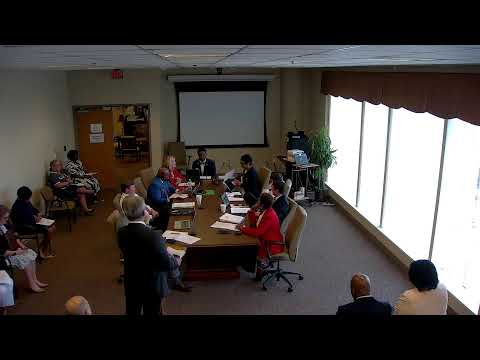
Council debates enforcement and zoning fixes after denial of conditional-use permit for short-term rental
Summary
At a Mobile City Council pre-meeting, members discussed denying a conditional-use permit for a property at 904 Kentucky Street, spotlighting broader concerns about enforcement, trash and parking code barriers, and whether the Unified Development Code needs revision to manage Airbnb/VRBO growth.
The Mobile City Council discussed a proposed denial of a conditional-use permit for a short-term rental at 904 Kentucky Street and used the case to examine the city's broader approach to Airbnb and VRBO properties.
The Chair said the application could not meet the city's existing code and urged the administration to study options: "These particular applicants, they are very, very good people," the Chair said, adding the council should deny this application under current law while the administration examines future options. The denial centered on site-specific compliance problems: trash receptacle proximity to property lines and on-site parking requirements.
Councilman Reynolds pushed for firmer enforcement of existing rules, saying "there's a law that's been written, and it's been written for a number of years, and that it's just not being enforced," and warned that lack of enforcement had allowed the situation to "snowball." Attorney Woods told the council the legal framework limits immediate enforcement options and recommended exploring legislative changes: "Ultimately, it is going to be a legislative solution," Woods said, urging staff to present viable options.
City staff explained why trash and parking requirements repeatedly block approvals. A staff member said only a handful of short-term rental operators have completed business-license and site-compliance steps, estimating "it may be 4 or 5" fully compliant operations even though larger counts of listings exist. Staff also described the municipal enforcement pathway when operators run afoul of rules: notice of violation, opportunity to conform, municipal offense ticket and environmental-court action — a process staff said has not reliably stopped operations.
Speakers also debated technical fixes to the code. Council members noted that changing mandatory wording in the UDC could allow more discretion; Attorney Woods explained the legal difference in plain terms: "The word shall means must, and may means choice." Several members supported revisiting the UDC and considering area-specific overlays to balance neighborhood impacts and tourism benefits.
Why it matters: council members said the issue affects neighborhood quality of life, tax fairness for lodging businesses, and public-safety and parking impacts. One council member noted the city is "way behind the curve" on tracking and taxing short-term rentals and suggested working with lodging stakeholders and Visit Mobile to improve compliance and revenue collection.
Next steps: the council directed administration and legal staff to return with options for code amendments, enforcement tools and public engagement; the transcript records discussion and a proposed denial of the conditional-use permit, but no roll-call vote was recorded in the pre-meeting transcript.