Get Full Government Meeting Transcripts, Videos, & Alerts Forever!
Get email alerts on the Education Services topic
No spam. Unsubscribe anytime.
Nashoba school meeting spotlights union and parent opposition to proposed food-services contract
Summary
Public commenters, union leaders and parents urged the Nashoba Regional School Committee to pause or reject an RFP to outsource food services, arguing the district’s small projected savings do not justify lower wages, fewer benefits or the procurement process that produced a single bid; district staff presented a vendor proposal with a $375,000 guaranteed return and said employees could remain district employees.
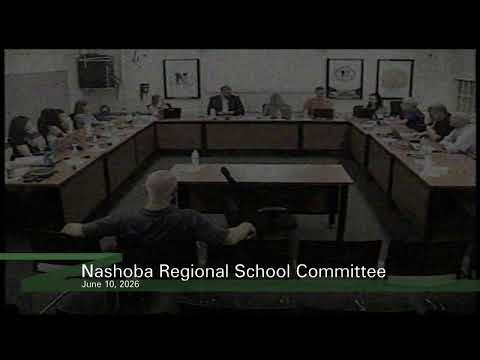
Public speakers, union leaders and a parent sharply criticized the Nashoba Regional School District’s pending request-for-proposals (RFP) to outsource its cafeteria operations during the school committee’s June 10 meeting.
Multiple food-service employees said the cafeteria is currently operating with revenue they described as approximately $2.1 million against roughly $1.8 million in costs and warned the contracted model would create a two-tier workforce. “We care about the kids and about the community,” said Ruth Merrick, a Lancaster cook, urging the committee to consider whether saving a small fraction of district spending is worth eroding pay and benefits for future hires.
Tiana Nelson, also a high-school food-services employee, said she understood the district framed the RFP as fiscal due diligence but disputed that the program is a cost driver; she said outsourcing would reduce wages and bargaining rights for new employees and described the RFP’s timing as appearing retaliatory after union arbitration activity.
Kevin Keveny, president of the NREA (the district’s bargaining unit representative for Units A and C), outlined the union’s timeline: the union demanded bargaining in December 2025; the union and district engaged intermittently in spring meetings; and an unfair-labor-practice timetable affected a scheduled May vote. Keveny said the RFP allows a vendor to hire new staff who would not be unit members and urged the committee to oppose outsourcing.
A parent, Ross Wolski, criticized the procurement timeline and said the district took months to prepare the RFP but allowed vendors only 30 days to respond and set a short window between posting and a mandatory pre-bid conference, which he said advantaged the incumbent vendor (recorded in the meeting as Witson's). Wolski pointed to recent contract terminations and quality complaints in other districts as reasons to scrutinize the vendor’s track record.
District staff presented the RFP outcome and answered member questions. Assistant Superintendent Karen (presenting staff) said four potential vendors attended pre-bid tours but only one vendor submitted a full proposal. The vendor’s price submission included a guaranteed return of $375,000 for the contract term (a three-year contract under the DESE/DESI template), and staff suggested that roughly $125,000 of that amount could be used for equipment repairs and maintenance while other uses must remain in food services. Staff stated that current food-service employees would have a choice to remain district employees under the collective-bargaining agreement; the vendor would hire new employees through attrition under the terms outlined in the RFP.
Committee members pressed staff about the single-bid process, comparables in other districts, the draft contract timeline and risks of losing in-house capacity if a contractor’s term proved unsuitable. Staff said a draft contract would be generated through the state template and made available for committee review; legal counsel and administration are continuing negotiations with the union and said they would schedule further meetings before any final action.
No vote was taken on the RFP at the June 10 meeting. The committee recessed into executive session to discuss collective bargaining and returned to continue the RFP presentation; staff said additional summer meetings and follow-up with the union are expected.
What’s next: administration said it would provide the draft contract and continue bargaining with the union; the committee was told a typical target for a contract start date is July 1, making summer follow-up likely.
Quotes (representative)
“We are part of the school community. We are parents. We’re retirees in town…We care about the kids and about the community,” Ruth Merrick said.
“The RFP allowed only one month for vendors to respond…This extremely condensed timeline favored just one vendor, Witson's,” said Ross Wolski.
“We sent a letter…to demand a bargain over changes in working conditions…The district lawyer reached out to meet us on May 12,” NREA President Kevin Keveny said, describing bargaining chronology.
Reporting note: committee staff and legal counsel provided the RFP status and the vendor’s guaranteed-return figure during the presentation; the vendor was not present at the meeting and no contract was finalized.