Get Full Government Meeting Transcripts, Videos, & Alerts Forever!
Get email alerts on the Nuisance Ordinance topic
No spam. Unsubscribe anytime.
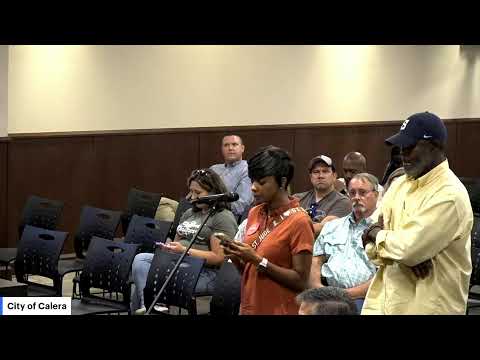
Council holds first reading of weed, nuisance ordinance after debate over 12-inch trigger
Summary
Calera council heard a public hearing and first reading on an ordinance allowing the city to abate overgrown vegetation and place a lien on property tax bills; council debated the statutory 12-inch threshold, enforcement discretion, HOA interactions and appeal rights and will return the item for final action at the next meeting.
The Calera City Council held a public hearing and first reading of Ordinance 2025-07, a proposed change to the city’s nuisance enforcement procedures that would let the city abate overgrown vegetation and seek reimbursement by placing a lien on the affected property’s tax bill.
City legal staff explained the draft mirrors an alternative in state statute: after notice and an opportunity to remedy a property, the city could have an abatement performed and add the cost as a lien assessed through the tax assessor rather than pursuing a civil suit. The ordinance would retain notice and appeal rights, including a chance for the property owner to bring the matter before the council.
Several council members expressed concern about the draft’s reliance on the statute’s 12-inch height trigger for nuisance vegetation. A council member said heavy rains can allow grass to exceed that height ‘‘overnight’’ and noted that strict enforcement could impose hardship on homeowners with steep lots or limited ability to mow. Legal staff said the 12-inch figure comes from the statute and provides a bright-line standard but acknowledged the council could set a different height; staff also noted the city may adopt internal discretion and additional notice before abatement.
Councillors discussed how the ordinance would interact with homeowners’ associations. Legal staff said the city could act independently of HOA processes; an HOA enforcement regime would not preclude city action if the property violates the nuisance standard. The attorney also described the standard notice timetable and an appeal process that allows property owners to contest the abatement determination to the council.
No final vote was taken on adoption; this was a first reading and the item will return on the next meeting agenda after council and staff draft any desired changes to the height threshold and enforcement language.
Ending: The council closed the public-hearing segment and directed staff to bring revised language and additional details back for consideration at the next meeting.