Get Full Government Meeting Transcripts, Videos, & Alerts Forever!
Get email alerts on the Cdbg Ada Reprogramming topic
No spam. Unsubscribe anytime.
Regional planner asks Brookfield board to reprogram up to $250,000 of CDBG funds for downtown ADA ramps
Summary
Central Mass. Regional Planning Commission staff told the Brookfield Select Board the town’s FY22–23 CDBG grant (originally $1.2 million) left roughly $300,280.70 available after final costs and change orders and proposed reallocating up to $250,000 for a downtown ADA sidewalk ramp project covering about 35 ramps.
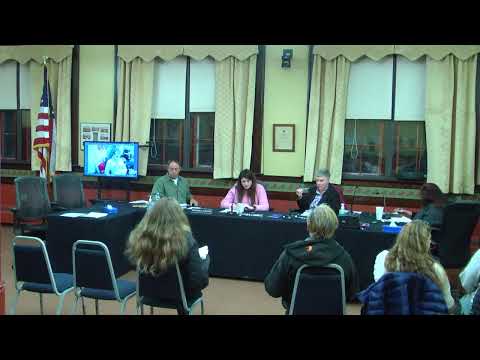
John Olri, principal planner at the Central Massachusetts Regional Planning Commission, told the Brookfield Select Board on Jan. 6 that the town’s FY22–23 Community Development Block Grant (CDBG) program funded the Kimble Street infrastructure project and left a remaining balance the commission would like to reprogram for downtown ADA sidewalk ramps.
The nut of Olri’s presentation was financial and procedural: the original grant from the U.S. Department of Housing and Urban Development, administered through the Massachusetts Executive Office of Housing and Livable Communities, had supported engineering and construction for Kimble Street. Olri said the Kimble Street project’s updated cost is $536,119.30 (inclusive of three change orders) and that an additional engineering change‑order request would raise the consultant contract to about $198,600, leaving a remaining available budget of $300,280.70. “We’d like to propose reallocating an amount up to $250,000 in available funds from the Kimble Street project into a downtown ADA sidewalk ramp Improvement Project,” Olri said, describing about 35 proposed ramp locations in the center of town.
Board members and residents questioned how sites were chosen and whether fixing ramps might create adjacent non‑compliant sidewalk sections. Olri said the locations were identified during a site walk by himself, Kyle (the highway superintendent), and the consultant; he said the selection favored ramps that tie into sidewalks already in good condition and prioritized high‑use intersections. He also gave a per‑ramp engineering/construction figure in preliminary materials, noting about $2,800 per ramp for typical work and pointing to an included cost breakdown and map.
Board members discussed procurement and bidding strategy; Olri recommended including the ADA ramps as bid alternates or ad‑options so the town could add scope if funds or contingency permitted, or pursue additional grant funding if needed. He said finalized engineering would confirm which ramps require additional surface restoration or private‑property coordination and that the project would return to the board for approval of final locations and bidding documents before construction.
The proposal also relied on Brookfield’s 2018 ADA self‑evaluation and transition plan; Olri confirmed that document was referenced and will be included in the justification sent to the state’s executive office as part of the amendment request.
Next steps indicated at the hearing: the board would consider a formal request to amend the FY22–23 CDBG program to include the ADA ramp project, the engineering consultant would complete detailed plans and cost estimates, and the town would return with final scope and bid documents for board approval before a construction solicitation.
The hearing included public comment and technical clarifications; no final vote on reprogramming occurred at the Jan. 6 meeting.