Get Full Government Meeting Transcripts, Videos, & Alerts Forever!
Get email alerts on the Public Space Policy topic
No spam. Unsubscribe anytime.
Winthrop committee refines draft public‑space policy; debates signs, murals, permits and fees
Summary
The committee extensively redlined a draft downtown public‑space policy, discussing whether it should be a council policy or ordinance, how broadly it should define 'public ways and spaces', exemptions for school facilities, permit timelines (45 days/Jan.15 for recurring events), and possible sliding‑scale fees. No formal vote was taken.
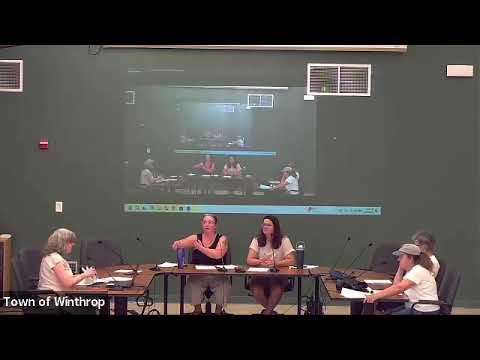
Winthrop’s Downtown Revitalization Committee spent the June 29 meeting redlining a draft downtown public‑space policy, focusing on geographic scope, definitions, signage and how the town should handle permits and fees for events and displays.
Members repeatedly recommended labeling the document a council policy — not an ordinance — to preserve flexibility for events, decorations and temporary displays. "I would say no" when asked if the draft should be an ordinance, one member said, arguing the document aims to set a process rather than create law.
Several members urged broader language to cover "public ways and spaces," including murals, temporary decorations, crosswalk art and signage, and asked the committee to produce a map that clearly defines what areas the policy will cover. The committee discussed an ongoing mural project coordinated with local schools; a member said artist Chris Cart of Hollowell estimated materials at about $5,000, with students providing painting labor and additional cost for hanging and installation.
The group debated whether the policy should regulate building‑mounted business signage. Members noted the town already has a zoning ordinance with sign standards that is poorly publicized; one member cited a recent neon sidewalk sign that "didn't fit the town vibe" as an example of the uncertainty the policy should address.
On permitting, the committee recommended concrete time frames: define "well in advance" (members suggested 45 days for most nonrecurring events and a Jan. 15 deadline for recurring annual events). Large events that require police or fire coordination may need longer lead time. The committee discussed a sliding or event‑size fee structure and recommended the policy reference a council‑approved fee schedule rather than hard‑coding amounts.
School facility exemptions drew concentrated discussion. Members proposed simplifying the exemptions language to say scheduled activities held at school facilities are exempt, avoiding parenthetical examples that could create confusion.
The committee also examined internal process questions: what application review steps will look like, which departments will be circulated for review, and whether the committee will only recommend applications to the council or have delegated approval authority for certain categories. No final decisions were made; Don will provide a revised draft and a list of current town events to inform timing and thresholds.
Why it matters: The policy will set how Winthrop governs the use of its publicly viewed spaces — from parades and fireworks to murals and business signage — and clarifies which events need town resources and permits.
Next steps: Don will revise the draft and circulate it; the committee aims to have a version ready for a September town council meeting and will continue edits via shared documents and occasional meetings.