Get Full Government Meeting Transcripts, Videos, & Alerts Forever!
Get email alerts on the Public Safety Programs topic
No spam. Unsubscribe anytime.
Calera launches voluntary special‑needs 'care packet' program and showcases student addiction‑prevention video
Summary
Dispatch and public-safety staff introduced a voluntary 'care packets' program to provide first responders preloaded information on residents with special needs; students also presented a short overdose‑prevention video produced with city partners.
Calera’s public‑safety team described a new voluntary program that allows residents with special needs to provide first‑responder teams with preloaded 'care packets' to improve the safety and effectiveness of emergency responses.
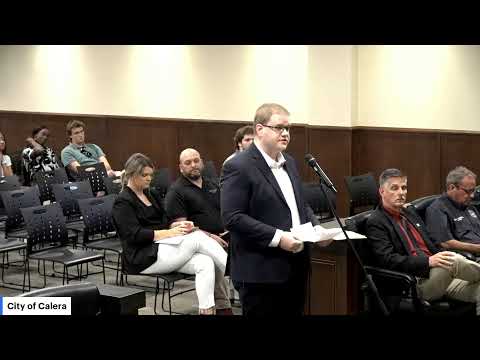
Dispatch supervisor Jesse Davis said the program, rolled out to the public and available at the police department lobby and online, stores information about residents with Alzheimer’s, dementia, autism spectrum disorders and mobility issues so officers and firefighters can view it before arriving on scene. Enrollment is voluntary and held in the department’s secure records; about 20 residents had enrolled at the time of the presentation.
Mayor and staff said the packets can help de‑escalate encounters, locate residents and communicate essential accommodations quickly. Jesse said the city will also present a related open house and the Alabama Torch Run for Special Olympics event will pass through the community.
Separately, city staff and high‑school peer helpers premiered a short, student‑produced video depicting the experience of overdose and recovery as part of addiction‑prevention outreach. Organizers said the video aims to engage youth and community members with a realistic portrayal to encourage prevention and treatment referrals.
Council and staff praised the programs and the work of dispatch, students and partnering organizations; no funding decision was required at the work session.