Get Full Government Meeting Transcripts, Videos, & Alerts Forever!
Get email alerts on the Special Education topic
No spam. Unsubscribe anytime.
Parents recount traumatic outplacement experiences and urge board to protect special-education services
Summary
Multiple parents told the Regional School District 09 board that inadequate in-district supports led to outplacement and, in one case, daily restraints and seclusion; parents urged improved training and preserving services as the board considers budget pressures.
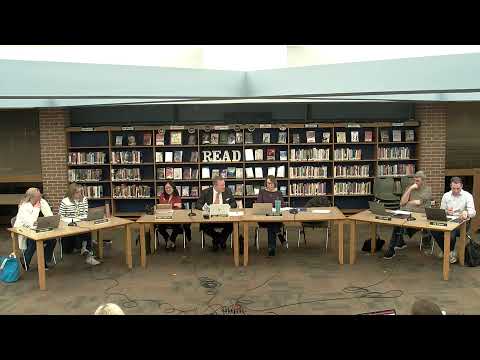
Several parents used the public-comment period at the Regional School District 09 Board of Education budget workshop to press the board to protect special-education services and to describe long-term harm they said children suffered in some in-district placements.
Shantel Pavick told the board that her autistic son experienced repeated restraints, seclusion and acute anxiety in earlier in-district settings and that, after advocacy, he was placed in a therapeutic program where “we have had zero restraints, zero seclusions, zero phone calls, zero school refusals and lots and lots of success.” Pavick said staff actions in prior placements left her son feeling unsafe: “I ran for my life. I had to fight back because they were trying to kill me,” she said, and urged the board to prioritize environment and supports rather than cost comparisons.
Other parents echoed those concerns. Kristen Anad criticized prior board remarks that compared schools using a car metaphor — “a Cadillac of school versus a Honda” — and said such comparisons pit general-education students against those with special needs. Anad blamed unstable administrative leadership for some of the district’s special-education problems and urged the board to ensure the next replacement for Katherine is experienced in special education.
Meredith Ferris and Raina Castano, both parents of students on IEPs, urged the board to better understand the multidisciplinary decision process that leads to outplacement and to invest in training at the building level. Castano, who identified herself as an assistant principal in another district, offered to provide professional-development support to district staff.
Brenda Phelps described a case in which her child had not received federally mandated services since October after behavioral and OT providers were removed; she warned that reducing supports could expose the district to litigation and advised the board to fully fund required services.
Board members responded during board-comment time, thanking the parents for speaking and several times assuring the public that they did not perceive special-education services were slated for cuts. One board member said they “would not support reducing the proposal for special-education services” and emphasized the district’s obligation under federal rules.
The public comments accompanied a wider budget workshop in which administrators outlined pressures in special-education tuition, clinical services and transportation. Administrators and board members agreed to follow up with additional transparency on line-item rollups and to continue the budget conversation at the next regular meeting; there was no formal board vote on the budget during this session.