Get Full Government Meeting Transcripts, Videos, & Alerts Forever!
Get email alerts on the K 5 Health Curriculum topic
No spam. Unsubscribe anytime.
New Canaan staff outline skills-based K–5 health curriculum, puberty lessons and state-mandated prevention instruction
Summary
K–8 health and PE curriculum leader Michael Tisha presented a skills-based K–5 health curriculum for the New Canaan School District, saying K–4 will get 10 lessons, fifth grade about 14–16 lessons (including three puberty sessions) and that parents will be emailed in advance of puberty and prevention lessons required under Connecticut law.
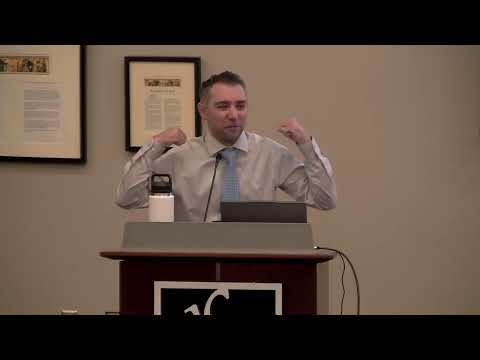
Michael Tisha, the K–8 health and PE curriculum leader for the New Canaan School District, presented the district's skills-based K'5 health curriculum to parents and staff, describing grade-by-grade lessons, classroom activities and advance-notification procedures for puberty instruction.
Tisha said the program emphasizes practice and modeling rather than textbook testing, and is organized around eight national health standards. "We're trying to equip students with the skills necessary to improve their health literacy, fostering the capability to make informed decisions," he said.
The curriculum uses a five-step instructional model—introduce, present, model, practice and provide feedback—so students repeatedly practice skills in context. Tisha said the approach aims to produce "students as critical thinkers, problem solvers, responsible and productive citizens, self-directed learners, and effective communicators." Homeroom teachers will deliver K'4 lessons so students remain in familiar settings; Miss Orlando, Mr. Hall and Mr. Stella were named as primary instructors, with Mr. Singali teaching some kindergarten units.
Grade-level highlights described by staff: - Kindergarten: self-management and simple wellness concepts (the wellness triangle), age-appropriate activities such as "eating the rainbow" and lessons that build vocabulary for physical, social and emotional health. - Grade 1: continued focus on self-management, the golden rule, and healthy habits (sleep, hydration, handwashing, helmets). - Grade 2: interpersonal communication with collaborative tasks (a Lego teamwork exercise) and conflict-resolution checklists. - Grade 3: the "great decision-making" model applied to short scenarios to teach when a choice is simple and when it requires more thought. - Grade 4: analyzing internal vs. external influences (a gingerbread activity), upstander vs. bystander roles and visual scale exercises. - Grade 5: a quarter of the year devoted to health (about 14'16 lessons across a six-day rotation), with personal wellness, interpersonal communication and human growth and development (puberty) units.
Tisha said the district follows a Connecticut General Statute requirement for sexual-assault and abuse prevention and awareness in elementary grades and frames the lessons as "healthy relationships" instruction. He described age-appropriate materials and in-class activities, including a "trusted tree" in which students identify trusted adults at school, home and in the community. "We will send out an email when those dates get closer so that you are alerted of it," Tisha told parents about the fifth-grade puberty sessions.
On logistics, Tisha said K'4 students will receive 10 health lessons per year delivered during homeroom; fifth graders will receive approximately 14'16 lessons and three puberty lessons scheduled during their workshop block. Staff said parent resources will accompany the emails so families can review lesson content in advance. Tisha also noted a prior outreach error: earlier emails did not reach parents because of an email-system glitch and staff corrected the communication process.
A short video of students was shown to illustrate classroom outcomes. In those clips, students described takeaways such as: "A healthy habit is something you do every day and every night" and "this year I learned to go to trusted adults," lines that Tisha used to illustrate the program's practical effects on students' decision-making and help-seeking.
Deputy Superintendent Jill Cory and teachers Christine Orlando and Nick Haw were present during the presentation and answered implementation questions. After the presentation staff offered parents the opportunity to review workbooks and materials, invited questions, and closed the session thanking attendees.
The district offered to email exact dates for puberty lessons when the schedule is finalized and to provide parent-facing resources; no policy vote or formal action was recorded during this meeting.