Get Full Government Meeting Transcripts, Videos, & Alerts Forever!
Get email alerts on the Ambulance Service topic
No spam. Unsubscribe anytime.
Ottumwa staff outline plan for one city‑operated ambulance with Ormed partnership; first‑year deficit expected
Summary
City staff proposed operating one ambulance through the fire department in collaboration with Ormed, citing a first‑year deficit (including benefits) of about $785,000 and a general fund hit of roughly $205,949; EMS advisory council urged more transparent stakeholder engagement.
City staff introduced a proposal to operate one ambulance through the Ottumwa Fire Department in collaboration with Ormed, saying the plan would require new firefighter/EMT hires, an administrative assistant and short‑term subsidy until federal/pass‑through funding offsets operating costs.
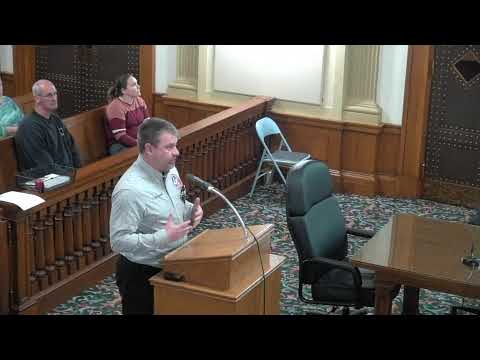
Mr. O'Donnell told council the draft budgets the ambulance plan as a major component and said, "This is not the Ottumwa Fire Department looking to take over EMS. This is the Ottumwa Fire Department working collaboratively in the system that is there now, helping shore up that system." He described the initial financial outlook: including benefits, staff estimated a first‑year deficit of about $785,000 and a direct net impact to the general fund (salary portion) of roughly $205,949.
Staff proposed nine additional firefighter‑EMTs in the original draft but said that number could be reduced to six after further refinement; the budget also includes an administrative assistant (25% charged to ambulance operations) and a fire inspector. Mr. O'Donnell said some or all of the year‑two costs could be offset by ground emergency medical transport (GMAT) Medicaid reimbursements, and he stated the city expects such funds to be available into fiscal year 2028.
Tim Richmond, director of emergency management and member of the local EMS advisory council (EMSAC), urged fuller stakeholder collaboration and cautioned that GMAT and other federal programs are important but not necessarily a complete solution. "I question consulting with a urban ... a suburb of Des Moines and not a community similar to our size," Richmond said, urging the city to consult communities with comparable demographics and to include hospital leadership and county public health in planning.
Staff and council discussed billing logistics (in‑house versus outsourced billing) and noted examples from other cities: staff cited Urbandale receiving approximately $3,100 per incident in GMAT reimbursements in a cited example and Burlington bringing in about $1.2 million in a recent year. Mr. O'Donnell said some federal or Medicaid funding could be expected but that the first year would show a deficit and that a more detailed staffing and revenue model would be presented at an upcoming workshop or meeting (staff mentioned March 2 as the next date for a detailed proposal).
Next steps: staff will refine the ambulance staffing numbers (including a potential reduction in EMT hires), clarify billing and GMAT estimates, coordinate with hospital management, and present a detailed proposal at the scheduled follow‑up meeting.