Get Full Government Meeting Transcripts, Videos, & Alerts Forever!
Get email alerts on the Downtown Redevelopment topic
No spam. Unsubscribe anytime.
Council approves conveyance for East Main Street redevelopment, citing $3.8 million private investment
Summary
After a public hearing, the Ottumwa City Council adopted a development agreement conveying three city-owned parcels at 105–109 E. Main Street to the proposed developer and approved terms intended to ensure project completion and property tax stability.
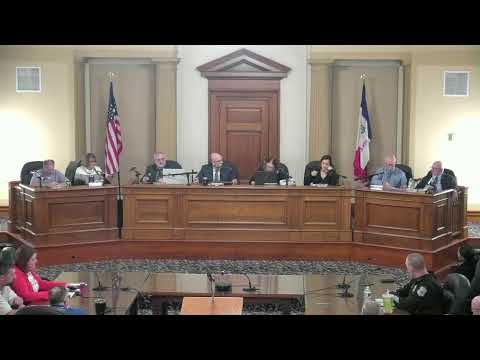
The Ottumwa City Council voted Feb. 17 to approve a purchase, sale and development agreement that will convey city-owned parcels at 105, 107 and 109 East Main Street to a proposed developer as part of a downtown redevelopment project.
City staff presented the plan at a public hearing, saying the project would add about 10 housing units and commercial uses including a laundromat and a golf‑simulator business, with estimated site improvements of roughly $3.8 million. "The purpose of the development agreement is to make sure the redevelopment is consistent with the urban renewal area plan," city administrator Philip Wrath said in the presentation.
Under the agreement the city would convey the parcels for $1 and the buyer would close by the end of March under the timetable in the draft. The developer would be responsible for all construction and compliance with applicable codes; the contract sets a construction completion target at the end of December 2029 and includes a developer completion guarantee, staff said.
To protect long‑term tax revenue, the agreement includes a five‑year minimum assessment clause that sets assessed value at $1,000,000 for 2030–2035 if the project is completed on schedule. Staff framed the rebate and TIF structure as funded only from the improvement the developer creates rather than drawing district resources.
"It's a five‑year rebate. They're responsible for paying taxes every year and rebate it back to them minus the debt service," the finance presentation noted when council asked about tax impacts. Council members asked detailed questions about who drafted the purchase agreement (staff confirmed the city wrote it) and how stamp and rebate calculations would be handled; staff said the city retains oversight through the public‑hearing and conditional‑use processes.
No written objections were received in advance of the hearing, and the council closed the public hearing and adopted Resolution No. 25‑2026 to authorize the conveyance and execution of the related agreement. The motion carried on a recorded roll call vote with council members present voting in favor.
The developer was identified in the hearing materials as a local company presented as "GCG," while the formal conveyance paperwork was listed in the notice as to JCG Rentals LLC. The council's approval authorizes the mayor to execute the agreement and requires the developer to meet the agreement's deadlines and conditions.
Council members said the project advances downtown revitalization and housing goals in the city's strategic plan. The council did not approve any additional incentives beyond the terms spelled out in the agreement; the public record of the hearing will be part of subsequent ordinance readings and the project files.
The council's formal resolution and the development agreement will be available in the city clerk's office; the developer must satisfy closing requirements and the city's inspection and certification process as the project proceeds.