Get Full Government Meeting Transcripts, Videos, & Alerts Forever!
Get email alerts on the State Climate Policy topic
No spam. Unsubscribe anytime.
Sen. Mike Barrett urges grassroots action, warns of federal setbacks and urges pivot to solar
Summary
At a Lexington climate meeting, Sen. Mike Barrett credited local activists for helping pass major state climate bills, warned that offshore wind and federal policy could face setbacks, urged a strategic pivot to solar and home electrification, and encouraged residents to attend a Jan. 28 Hanscom-area meeting about Massport proposals.
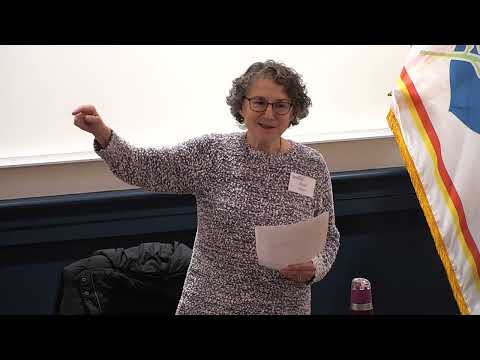
State Sen. Mike Barrett delivered a wide-ranging keynote at LexCAN’s annual meeting in Lexington, crediting grassroots organizers for shifting negotiations on late-stage climate legislation and urging local action to sustain momentum as federal policy may slow progress.
Barrett said the Legislature passed three significant climate bills in recent two-year sessions and that grassroots pressure prevented what he called a “skinny” package from becoming law. "There would have been nothing but a skinny bill but for you," he told attendees, crediting Lexington’s activism for helping turn the tide.
He warned of immediate national headwinds, saying offshore wind development faces serious near-term risk: "right now the best guess is that offshore wind is gone or at least mothballed for four years," Barrett said, and recommended that advocates pivot toward accelerating rooftop and distributed solar, which he described as more immediately scalable and resilient to federal interference.
On electrifying transportation, Barrett emphasized home charging as the priority for day-to-day EV use and highlighted "level one" (120-volt) charging as an affordable option for many households. He also discussed the higher costs and barriers of "level two" home charging and whole-home electrification, noting retrofits and panel upgrades can be expensive.
Barrett explained two statutory changes that guided the recent bills: he described amendments that give the Department of Public Utilities discretion to evaluate natural-gas infrastructure expansions against climate goals (citing changes to provisions in Chapter 164) and changes to Massport’s enabling statute to require the agency to weigh greenhouse gas impacts alongside economic development. He said those Massport changes open the agency to legal scrutiny if it appears to ignore emissions impacts.
On the local Hanscom/Massport controversy, Barrett criticized proposed private-jet activity near Hanscom as "morally disgusting" and encouraged residents to attend a public Hanscom-area towns committee meeting on Jan. 28 where Massport executive Rich Davy will present plans. "Show up on the 28th — it’s very important," Barrett said.
During Q&A, Barrett urged climate advocates to frame policy in ways that protect working- and middle-class households from disproportionate costs. He cited analysis (attributed in his remarks to a Massachusetts economist) showing continued investment in gas infrastructure could impose long-term, amortized costs on ratepayers for decades unless policymakers change course.
Barrett closed by urging continued local engagement: "Trump can slow but not stop EVs," he said, and called on communities to press for solar, home electrification, and housing near transit as practical climate strategies.
What’s next: Barrett encouraged residents to attend the Jan. 28 Hanscom-area meeting and to continue local letter-writing and outreach efforts to influence legislative and regulatory decisions.