Get Full Government Meeting Transcripts, Videos, & Alerts Forever!
Get email alerts on the School Finance topic
No spam. Unsubscribe anytime.
Strongsville board hears community feedback and scenarios as district weighs operating levy and bond
Summary
At a June 11 work session the Strongsville City Schools Board reviewed feedback from a 27‑person community leaders meeting and staff'prepared levy-modeling that compares Nov. 2026 vs. 2027 ballot timing, millage scenarios and projected 2030 cash balances; board members discussed messaging and potential reductions paired with any new revenue.
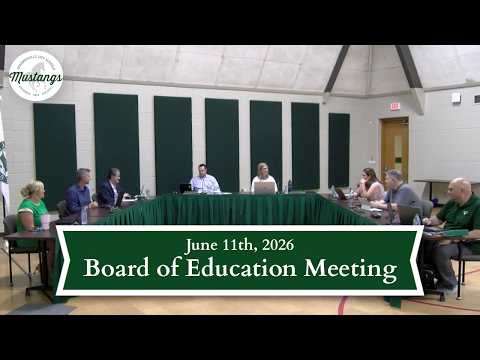
The Strongsville City Schools Board of Education on June 11 received a summary of a community leaders meeting and a set of levy and bond scenarios intended to guide decisions about a potential operating levy and capital bond.
Superintendent Dr. Ryba and staff said about 27 local stakeholders attended the leaders meeting, which included civic groups, two city council members and Mayor Persiac. The group discussed timing, ballot fatigue, property tax messaging and the trade‑offs between using reserves, making staffing or program reductions and asking voters for new revenue.
George (district staff) and the district's budget analyst walked the board through scenarios that compare placing an operating issue on the Nov. 2026 ballot (collections begin calendar year 2027) versus waiting until calendar year 2027 (collections begin 2028). The district's materials showed that a renewal-only effective rate (3.37 mills) would generate roughly $8.2 million annually, while a larger millage (for example ~10 mills in one scenario) would generate about $22.5 million. Staff also modeled the impact on the district's projected cash balance in fiscal year 2030 and the reductions that would be required under each timing option to reach a 90‑day cash target.
"If we go in November of 2026, we'll start collecting those dollars in calendar year 2027," George said while reviewing the charts, explaining why timing matters for the magnitude of reductions that would otherwise be necessary.
Board members raised both strategy and messaging concerns. Several trustees urged simplifying public communications to show voters a clear comparison between what taxpayers pay now and the incremental change the district is seeking, rather than expecting voters to reconstruct multi‑year scenarios from past levy histories.
"If we expect the voter to have to get a spreadsheet out to figure out scenarios, I don't think we're being fair to the voter," one board member said, urging a straightforward presentation of the "additional ask" on a typical property tax bill.
The board discussed options to draw down some funds from the district's 070 fund (permanent improvement) as a one‑time backfill; staff noted that some funds in 070 are already committed to projects (for example turf) and that moving money between funds would affect capital flexibility. Trustee remarks referenced the district's past levy cycle (including a large 2019 ask that voters did not renew) as context for what millage ranges are politically feasible locally.
Staff closed the presentation with a recommended timeline: if the board wants to preserve the ability to put a bond on the November 2026 ballot, it would need to adopt a 4% consent resolution at the June 30 meeting, with subsequent filings by July deadlines (county tax commissioner and board of elections deadlines were cited). Otherwise, waiting pushes the collection start date and changes required reductions.
The board did not adopt a ballot question on June 11. Trustees asked staff to return with narrower scenario options, more concrete examples of what specific reduction amounts would mean for programming and a plan for continued community engagement before they vote on operating or bond resolutions at upcoming meetings.
What's next: staff will bring refined scenarios and a proposed communications approach for the June 30 and July meetings; the board discussed maintaining flexibility to add a 4% resolution to preserve a November filing window.