Get Full Government Meeting Transcripts, Videos, & Alerts Forever!
Get email alerts on the Emergency Management topic
No spam. Unsubscribe anytime.
County updates: federal grant cuts, EMS system plan deadline and local fire-investigator training proposal
Summary
Emergency management staff told the committee that Washington Countys SHSP and EMPG awards were reduced this year; the state has issued a county EMS system plan framework due Dec. 19 and staff described a proposed local fire-investigator training option to reduce travel and certification barriers.
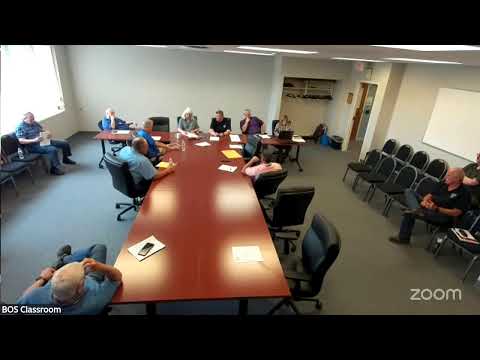
Emergency management staff updated the Public Safety Committee on grants, statewide planning and training on June 30.
Staff said Washington Countys State Homeland Security Program award this cycle is $42,008.65 (about $25,000 less than the prior allocation) and the Emergency Management Performance Grant award is $24,001.06 (about $2,400 less). Those grants typically fund items such as drone mapping, community notification and cybersecurity/election security projects; staff noted the awards are restricted to designated categories and must be coordinated with law enforcement when required.
Separately, staff described a new state requirement: each county must submit a county EMS system plan using a released framework. The countys deadline to submit the plan to the state is Dec. 19; staff said they will collect data from municipalities and EMS agencies, filter non-emergency transports from dispatch calls, and convene stakeholders to produce the plan.
On training, staff proposed a county-based fire-investigator training option that would use local instructors to deliver the International Association of Arson Investigators fundamentals coursework at a per-team cost under $1,500 (excluding later certification costs and field training). Committee members discussed funding options, including reallocating previously pulled training money, and asked staff to return with cost details and a finance recommendation.
Why it matters: The grant cuts reduce discretionary capacity for equipment and projects that support investigative and response capabilities; the EMS plan is a state-mandated deliverable with a short timeline; the training proposal aims to accelerate certification and increase investigative capacity without lengthy travel and staff disruptions.
What comes next: Staff will submit grant applications as required, coordinate data collection for the EMS plan and return to the committee with cost estimates and a proposed funding source for the fire-investigator training.