Get Full Government Meeting Transcripts, Videos, & Alerts Forever!
Get email alerts on the Budget topic
No spam. Unsubscribe anytime.
Ottumwa council weighs $1M general‑fund gap, eyes franchise‑fee increase and agency cuts
Summary
City staff told the council the FY2027 general fund faces a shortfall of just over $1 million and presented scenarios including a 1% franchise‑fee increase (estimated ~$478,333 per 1%) and several departmental staffing and program reductions. Council asked staff to return with detailed 1% and 2% scenarios and one without a fee increase.
Ottumwa City officials on Monday confronted a projected FY2027 general‑fund shortfall of just over $1 million and began weighing a mix of revenue increases and spending cuts to close the gap.
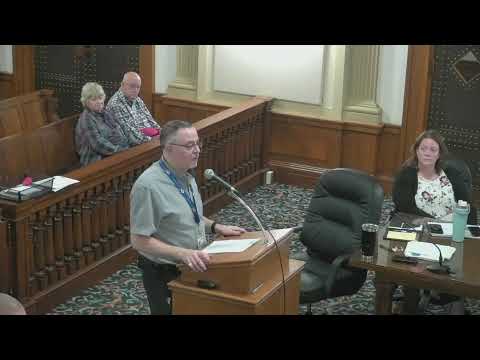
Cole O'Donnell, who led the budget presentation, said restoring previously omitted items (including fire inspection fees) produced the roughly $1 million estimate after staff reconciled worksheet anomalies. He told the council that about 60% of proposed general‑fund expenditures are tied to public safety and that 72% of the city’s proposed spending across departments is wages and benefits.
To cover part of the shortfall, staff proposed increasing the city’s franchise fee currently set at 3%. O'Donnell said each one‑percentage‑point increase in the fee would bring in about $478,333. Using utility bill averages provided by vendors, staff illustrated the household impact: on an Alliant Energy average monthly bill of $150, a 1% increase translates to roughly $18 per year; for a Mid‑American average monthly bill quoted at about $54.94, the annual effect is smaller (staff gave the example of about $6.60 per year for a 1% rise). Council asked staff to model 1% and 2% increases and an alternative showing the effect of raising the fee to higher levels, up to 5%, which staff estimated would come close to balancing the fund.
On the spending side, councilors reviewed a long list of proposed reductions and reconfigurations across departments. Highlights included: - Finance: a suggested elimination of one accounting specialist position, estimated total expenditure reduction of $76,315 with an approximate $49,000 direct benefit to the general fund, though staff warned of delays in receivables, audit impacts and weaker segregation of duties if the position were cut. - Clerk’s office: trimming discretionary items (advertising, legal publication fees) and correcting mileage budgets; small net savings were projected. - Parks and recreation: shifting the beach manager from full‑time to a year‑round part‑time supervisor (estimated net general‑fund savings ~ $35,000) and proposals to eliminate a beach maintenance position while reassessing certification and on‑call coverage needs. - Public safety: some new positions (fire inspector and code enforcement roles) remain in the draft budget because inspection fee revenue may offset costs; other proposed cuts to public safety staffing were discussed cautiously because of service and safety implications.
Councilors repeatedly emphasized the trade‑offs. "I don't want to be quick to cut positions — police and fire are not areas where we can easily reduce staffing," one council member said. Others warned that freezing pay or reducing staff could increase future costs and create recruitment problems.
The council approved by general consent some modest reporting changes (adding a report date to monthly statements) and asked staff to prepare three full scenarios for comparison: (1) all proposed reductions without a franchise‑fee increase, (2) proposed reductions plus a 1% franchise‑fee increase, and (3) proposed reductions plus a 2% franchise‑fee increase. Staff committed to circulating the scenarios and setting follow‑up line‑item review meetings with council members.
Next steps: staff will run the 1% and 2% franchise‑fee scenarios and return updated worksheets and schedules for council review; no formal policy decision on the fee or major cuts was made at the meeting.