Get Full Government Meeting Transcripts, Videos, & Alerts Forever!
Get email alerts on the School Culture topic
No spam. Unsubscribe anytime.
Kums students showcase PBIS program; school reports large majority responding to Tier 1 supports
Summary
Kums School students and staff presented the district’s PBIS (Positive Behavior Intervention and Supports) program to the Mashpee School Committee on Oct. 16, reporting that SWIS data show about 94.21% of students currently responding to universal (Tier 1) supports and describing targeted interventions for a small group of higher-need students.
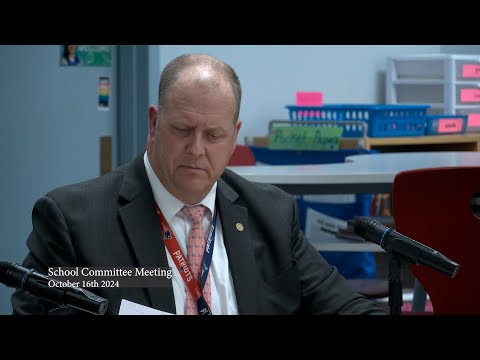
At the Oct. 16 Mashpee School Committee meeting, students and staff from Kums School showcased the district’s PBIS (Positive Behavior Intervention and Supports) system, explaining incentives, daily routines and how staff use SWIS data to target supports.
"PBIS stands for positive behaviors intervention and supports," said Mr. Pra during the presentation, describing how the school awards "falcon eggs" to students who demonstrate the "Falcon 5" expectations: be safe, be responsible, be respectful, be caring and be ready. Principal O'Brien explained the school’s data-tracking work, saying the SWIS database helped staff identify times and locations for targeted instruction, such as transitions and hallways.
O'Brien told the committee that last year about 82.8% of students fell into the Tier 1 (universal) band; this year, with the program rolled out in November and staff entering day-one data, the school reported 94.21% of students responding to Tier 1 supports and roughly 2% in the highest-need tier. She said the school uses those data to allocate counseling resources, involve parents where appropriate, and design classroom lessons that teach expected behaviors.
The presentation included examples of how students practice expectations (morning announcements, rehearsed voice-level cues and bus-training lessons) and how classrooms collect "falcon eggs" into classroom and school nests that trigger schoolwide celebrations. Principal O'Brien credited district training (the May Institute) and a board-certified behavior analyst, Beth Seagull, for supporting lesson development.
Committee members praised the students’ presentation and asked for the SWIS triangle charts to be brought back later in the year for comparison. Dr. H said the district will record and publish a podcast episode on school culture that will further explain the program and the data the schools use to monitor it.
The committee did not take formal action on the presentation; members encouraged continued data reporting and periodic follow-ups to show trends over the school year.