Get Full Government Meeting Transcripts, Videos, & Alerts Forever!
Get email alerts on the Invocation Policy topic
No spam. Unsubscribe anytime.
After extended public comment, council adopts invocation policy with transparency changes
Summary
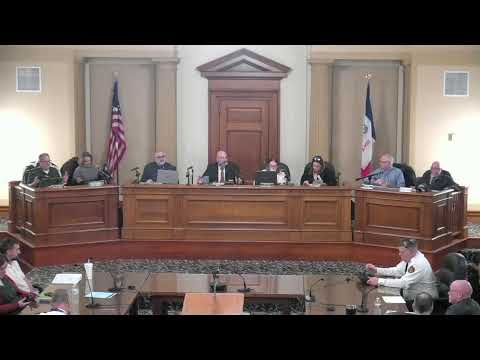
Following an extended public-comment period that included both opponents and supporters, Ottumwa City Council adopted an invocation policy directing how volunteers will provide opening invocations, with council members pressing for timestamped volunteer sign-ups and a due-process step for disqualification.
The Ottumwa City Council adopted an invocation policy after nearly an hour of public comment that produced strongly held arguments on both sides. The measure passed 4'1.
Mayor Benjamin Foot introduced a draft policy that would permit a short invocation at the start of council meetings in addition to the Pledge of Allegiance. Supporters at the podium described prayer as historical and unifying; several speakers, including local clergy and residents, said an invocation provides a public expression of humility and civic prayer. Opponents warned about the legal and financial risks of inviting religious content into government forums, urged protections for nonbelievers and asked the council to clarify volunteer selection, transparency of the sign-up list and a process to address potential policy violations.
During the public-comment period, speakers raised procedural requests: make volunteer sign-ups available on the city website, timestamp requests to establish a first-come, first-served order, and include an explicit due-process step before disqualification of a future volunteer. Several speakers cited the 2014 U.S. Supreme Court guidance that municipal prayers can be lawful but must not coerce participation, disparage other faiths, recruit converts or indicate government endorsement of a particular religion.
Council discussion repeatedly returned to transparency and risk: one council member urged a timestamped online sign-up to protect the first'come-first-served intent; another asked for a clear appeal or council-review path before permanently disqualifying a speaker. The mayor and several members defended the policy as a reminder to seek wisdom in decisions and an inclusive civic practice; opponents flagged potential litigation and asked whether taxpayer dollars devoted to defense would undermine fiscal priorities.
When placed to a vote, Council Member Galloway voted no; Council Members Hoffman, Dupra, Cavanus and Reid voted yes. The council chair indicated intent to publish volunteer procedures on the city website and to develop an internal due-process step for contested disqualifications.