Get Full Government Meeting Transcripts, Videos, & Alerts Forever!
Get email alerts on the Special Education topic
No spam. Unsubscribe anytime.
SEPAC urges formal district consultation after parent survey flags inconsistent communication
Summary
SEPAC co-chairs told the Nashoba Regional School Committee that a new parent survey and recent program decisions show inconsistent family engagement, and asked the committee to adopt a consistent framework for involving SEPAC in district planning affecting students with disabilities.
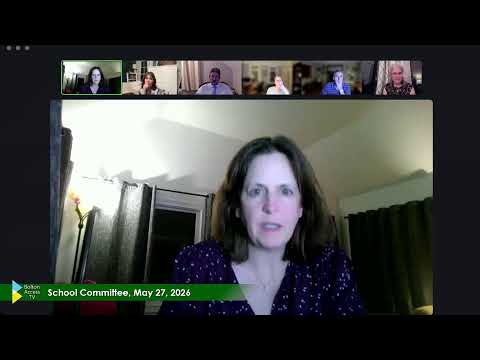
Pam Duggan, co-chair of the Nashoba Regional Special Education Parent Advisory Council (SEPAC), told the school committee on May 27 that SEPAC needs a consistent, district-wide process for consultation on decisions that affect students with disabilities. "There is currently no consistent process for involving the SEPAC before major decisions affecting students with disabilities are finalized," Duggan said, citing recent changes to the Rise and Leap program locations as an example where SEPAC said it was notified only after decisions were made.
Duggan outlined SEPAC's recent work, including a parent handbook now in final edits with Director of Student Services Rowena Demanche, and urged broader engagement with district leadership beyond the student-services office. "Our role is to advise the district on matters related to special education and the safety of students with disabilities," Duggan said, referencing SEPAC's statutory role under Massachusetts law chapter 71B.
Rebecca Viola, SEPAC co-chair, presented results of an April 2026 caregiver survey of 71 respondents. Viola said the survey found consistent strengths (committed individual staff and respectful meeting tone) and persistent gaps: inconsistent communication, unclear explanations of parental rights, confusion about evaluation and eligibility decisions, and implementation concerns for 504 plans. "Families want predictability and transparency, not just kindness," Viola summarized.
Committee members welcomed the data and suggested several follow-ups: broaden outreach to increase survey response rates, disaggregate results by grade-level and event type (for example, initial eligibility decisions versus annual IEP meetings), and surface building-level communication practices that appear to work so they can be scaled. Chair Leah said the SEPAC presentation and survey will be included in planning for the committee's summer retreat.
Pam Duggan asked the committee to adopt a formal consultation framework so family perspectives can be included earlier in policy and district-wide changes. Director Demanche was described in the presentation as receptive to feedback and collaborating on the handbook; SEPAC requested clearer expectations for the school-committee SEPAC liaison role and stronger building-level supports to increase family engagement.
The committee praised SEPAC's work and asked the chairs to share the presentation and supporting materials with members for summer planning. The SEPAC priorities going into next year: improving communication consistency and clarity, strengthening procedural-safeguards education for families, and increasing parent engagement with SEPAC.