Get Full Government Meeting Transcripts, Videos, & Alerts Forever!
Get email alerts on the Ev Charging Study topic
No spam. Unsubscribe anytime.
Columbia County hires Georgia Power to study EV chargers in parks; staff estimates $500K–$1M program cost
Summary
The county authorized a $10,000 study with Georgia Power to identify power needs, sites and procurement options for park-based EV chargers. Staff estimated total installation costs between $500,000 and $1,000,000 and said federal Y601 funds could reimburse about 80% with a 20% local match; staff will return with a detailed plan before purchases.
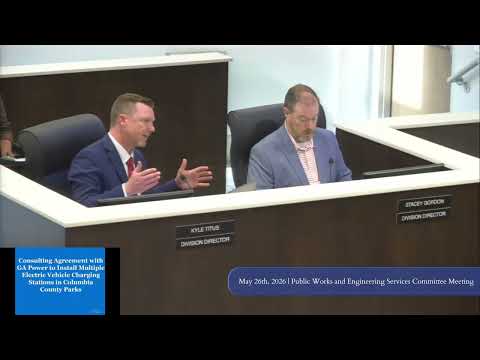
The Columbia County Public Works & Engineering Service Committee approved a consulting agreement with Georgia Power to scope electric vehicle charging stations at county parks.
Matt Slackner told the committee that Georgia Power will assess existing power infrastructure, identify upgrades needed to support chargers, and propose turnkey purchase and installation options. The county authorized an initial, time-and-materials engagement not to exceed $10,000 to develop the plan. "We're estimating somewhere between half a million and a million dollars total," Slackner said when describing the range of possible total program costs.
Staff said the study will examine multiple ownership and payment models — including whether Georgia Power might own equipment and only bill the county for power, or whether stations would be county-owned and available via pay-at-charger systems. Slackner said staff had identified federal Y601 carbon-reduction funding as a potential source; the transcript records staff saying that Y601 would reimburse roughly 80% of eligible costs, leaving a 20% local match. County staff also mentioned Georgia Power make-ready programs that could reduce upfront costs, but said the county would remain responsible for upkeep unless a third-party ownership model is negotiated.
Why it matters: Installing EV chargers at parks can increase utility access for residents and visitors who spend multiple hours at park events, but it requires capital investment, long-term maintenance planning and coordination with the utility. The study is intended to deliver the technical foundation and financing options the county will need before authorizing purchases or installation contracts.
Next steps: Staff expects Georgia Power to deliver a plan in roughly 90 days and will return to the committee with site recommendations, cost estimates, and proposed funding sources prior to any procurement or installation decisions.