Get Full Government Meeting Transcripts, Videos, & Alerts Forever!
Get email alerts on the Audit topic
No spam. Unsubscribe anytime.
Auditors give Geneva City schools an unmodified FY2024 opinion, flag internal-control and single-audit issues
Summary
External auditors issued an unmodified opinion on Geneva City School System’s FY2024 financial statements, reporting $22 million in revenue and a $2.3 million net increase in fund balance, while identifying internal-control weaknesses and federal single-audit findings that the district said it is addressing.
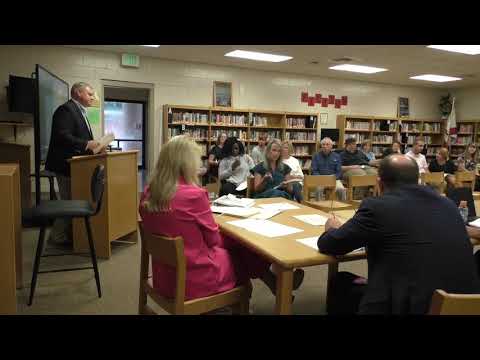
Carr, Riggs & Ingram partner Brian Freay told the Geneva City Board of Education the independent auditor’s report for fiscal 2024 is an unmodified opinion — the highest level of assurance auditors provide. “This is our independent auditor report issued and as part of our audit of the financial statements… This is an unmodified opinion,” Freay said.
Freay and manager Elizabeth Whitaker reviewed the district’s broad-year financials: total revenues of about $22 million (roughly $13 million state, $3.9 million federal and $4 million local), expenditures of about $19 million, and a reported net increase in fund balance of $2.3 million that brought fund balance to approximately $6 million by year-end.
The auditors described the district’s combined statement of net position as showing a deficit in net position that stems primarily from recognition of pension liabilities; they emphasized this is an accounting recognition that does not affect current cash flow. As Freay said, the pension reporting “doesn’t really indicate any issues with our current operations.”
The audit also included compliance and control findings under the federal single-audit standards. Auditors reported material weaknesses and significant deficiencies related to internal control, including segregation-of-duties limitations driven by small staff size, and exceptions in procurement and competitive-bidding processes. Freay explained the segregation issue as “primarily due to the size of the board and the limited financial resources that we have to go out and hire staff,” and said that the district has discussed corrective actions.
Auditors also identified compliance issues tied to federal awards testing: a qualified report on compliance for one program and findings related to activities allowed/allowable and prevailing-wage requirements for certain construction paid with ESSER (Education Stabilization) funds. The auditors said some contractors’ certified payrolls and pre-approval documentation were not consistently on file for projects funded with federal recovery dollars.
During board Q&A, members asked about purchase orders and invoices that were incurred before formal approvals. Freay acknowledged instances in which invoices arrived before the purchase-order process was completed and reiterated that many questioned transactions were allowable expenses but lacked the ideal pre-approval controls. The district’s chief financial officer, Kim, was named as the contact if members of the public want a copy of the report.
The auditors recommended continued attention to procurement controls and segregation of duties; district staff told the board they had discussed corrective actions and would implement additional review steps. The board did not take formal action on the audit report itself, but members thanked auditors for their work and accepted the presentation.
The full report is available on request through the district’s finance office.