Get Full Government Meeting Transcripts, Videos, & Alerts Forever!
Get email alerts on the Infrastructure Finance topic
No spam. Unsubscribe anytime.
Trussville council approves Tapestry Village improvement district after extended developer briefing and tax debate
Summary
After a lengthy presentation and Q&A, the Trussville City Council voted 4–1 on Jan. 13 to approve formation of the Tapestry Village municipal improvement district, a financing vehicle the developer says will cover water, sewer and turn-lane work funded by assessments and bonds. Citizens raised concerns about sales-tax exemptions.
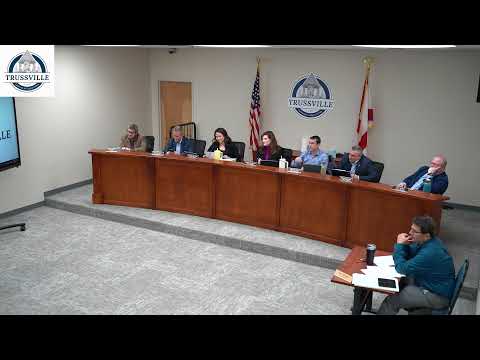
The Trussville City Council voted 4–1 on Jan. 13 to approve a resolution advancing the creation of a municipal improvement district (MID) for the Tapestry Village development, a financing structure the developer said would be used to pay for major infrastructure work.
The council’s vote authorizes the district-formation step required before assessments and bond validation can proceed. Council President Anderson, Couns. Far, Horton and Jackson voted yes; Coun. Miller opposed the measure.
Why it matters: The MID law (Ala. Code §§ 11-99A-1 to 11-99A-52) lets a nonprofit district issue bonds and levy assessments on property in a defined area to repay those bonds. The city’s city attorney and outside counsel told the council the district’s bonds would be independent obligations and would not count against the city’s debt.
What presenters told the council: Developer Brooks Garris said the site now lacks water and sewer and will require substantial public infrastructure, including water/sewer main extensions and turn lanes at entrances. Garris and his counsel estimated they would seek roughly $1.5–$2 million in bond proceeds to pay for primary improvements, though they said that might not cover all costs.
City attorney Chesley and outside counsel explained the statutory steps: if the council forms the district, the district will later petition the council to levy specific assessments and to approve the bond issuance; the bond validation process occurs in Jefferson County Circuit Court and can be appealed within statutory timelines.
Public concerns and tax questions: Citizen Jean Melton told the council the city and school system rely on sales and use tax revenue and urged council to require the developer to waive any sales-tax exemption. Counsel and the developer responded that the statute exempts materials purchased by the district itself but does not exempt materials purchased by private homeowners; counsel also noted the council can limit or clarify exemptions at the assessment stage. The issue of whether or how the council should restrict tax exemptions was left unresolved and flagged for possible contract language or later action.
Next steps: Approval of the formation resolution is an early procedural step. If the district proceeds, the district’s board will determine final improvement costs, the district will propose assessments, and the council would hear and approve the assessments prior to bond validation. Only after those steps would bond proceeds be issued and assessments become recorded obligations against the land.
Council action: Resolution to approve the proposed Tapestry Village MID (motion by Coun. Jackson) — outcome: approved 4–1.
Context: The council also discussed other items on the Jan. 13 workshop agenda, including a proposed comprehensive plan contract and a presentation from PNC on treasury-management options.