Get Full Government Meeting Transcripts, Videos, & Alerts Forever!
Get email alerts on the State Policy topic
No spam. Unsubscribe anytime.
Staff summarizes state bills and ballot questions that could affect city budgets and services
Summary
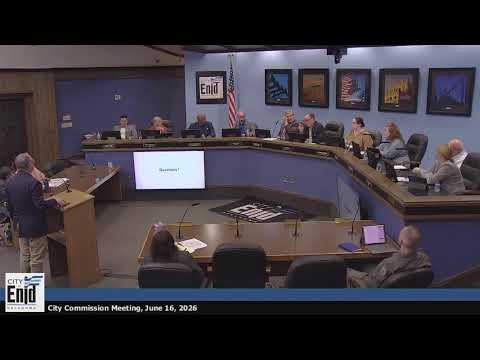
A city presenter summarized recent state legislation and ballot questions relevant to municipalities, including bills on rounding cash transactions, doxxing protections, water infrastructure funding, municipal fines, military land protections, and several state ballot measures on minimum wage, property tax limits and voter ID.
A staff legislative briefing outlined multiple pieces of state legislation and upcoming ballot questions city leaders should monitor.
Kurt reviewed priority items from the state session and the Oklahoma Municipal League (OML) list: the so‑called Common Sense Act enabling cash‑rounding, expanded protections against doxxing of municipal officials, and a new water and wastewater infrastructure investment program (Senate Bill 1176) that will be administered by the Oklahoma Water Board. He also flagged Senate Bill 1775 on municipal fines, which may allow some municipal penalties to align with state statutory penalties.
Kurt described two bills affecting military installations (SB 392 to extend a military planning commission and SB 893 restricting certain foreign ownership of agricultural land near installations) and several economic development measures (increasing pooled finance caps and extending the Rural Jobs Act tax credit). He encouraged staff to review how changes to state reimbursement rules (State Question 844) and other tax and ballot measures could affect local revenues.
Kurt urged commissioners to monitor pending litigation over a proposed elimination of ad valorem taxes on primary residences (State Question 843) and to note that other state questions in August and November could change reimbursement mechanics or require constitutional amendments (voter ID and judicial nominating reform were discussed). He also noted a modest increase in state transit funding and recommended pursuing matching federal grants for local transit upgrades.
What’s next: staff recommended continued monitoring of interim studies and legislative changes, evaluation of revenue impacts if state ballot measures pass, and coordination with OML on litigation and advocacy.