Get Full Government Meeting Transcripts, Videos, & Alerts Forever!
Get email alerts on the Infrastructure Projects topic
No spam. Unsubscribe anytime.
Commissioners press staff as $260,000–$267,000 Cleveland Street change order heads to regular agenda
Summary
City staff and an ODOT district engineer described a contractor delay claim tied to previously unrecorded fiber lines on the Cleveland Street widening project; staff said the city will pay the contractor and pursue utilities for reimbursement, and commissioners requested additional auditing and legal review before a regular‑agenda vote.
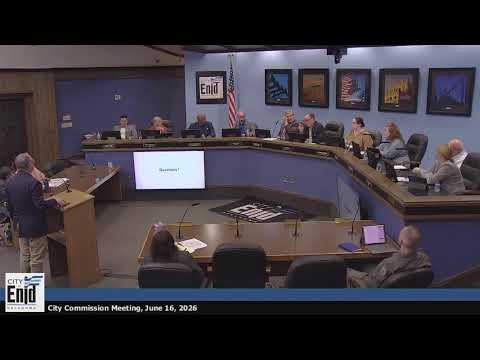
Mayor Mason and the Board of Commissioners spent the majority of the study session Wednesday examining a proposed change order tied to the Cleveland Street widening project.
City staff said the project — widening Cleveland from the railroad to Willow — is complete and the contractor finished punch‑list items. Staff reported the federal share of the project is about $2.6 million and the city’s share is roughly $4.6 million; during construction, crews encountered recently installed fiber and other utilities not placed where design documents indicated. That conflict extended construction time, staff said, and the contractor submitted a delay claim that staff and ODOT negotiated down to roughly $260,000 to $267,000.
Murali, the presenting staff member, told the commission that the contractor’s claim covers downtime, equipment on site and subcontractor hours that were rendered unproductive by the utility conflict. “We follow the contract to, you know, legally,” Murali said, and staff removed profit and overhead from the change‑order calculation before presenting the negotiated total to the commission.
Matt Mitchell, district engineer for the Oklahoma Department of Transportation, told commissioners that utility conflicts and delay claims occur frequently on projects that span multiple years of design and construction. He described the documents ODOT reviewed and said the negotiated amount reflected audited chargeable days and typical contract remedies. “Delay claims are not easy to swallow in any scenario,” Mitchell said, but added that his office had reviewed the documentation and was comfortable with the audit and negotiation process.
Commissioners pressed staff on whether the city could seek reimbursement from the fiber companies (identified in discussion as AT&T and Dobson) that installed lines in locations different from the project plans. Staff said the practical approach is to pay the contractor to keep the project moving and then pursue claims or relocation costs against the utilities where warranted, but that recovery is determined case‑by‑case and can be legally challenging.
Board members expressed frustration at the overall project cost — which staff said rose from earlier estimates in part because of post‑design market and material price increases — and several commissioners said they wanted more time to review line‑by‑line backup before taking formal action. Legal staff was on hand and commissioners were told the change order will appear on the upcoming regular session agenda for formal consideration; no vote occurred during the study session.
What’s next: staff and ODOT offered to meet individually with commissioners to walk through the contract and the change‑order documentation; legal will evaluate recovery options against the utilities and the change order will be considered formally at the regular meeting.
Authorities referenced in the discussion included the ODOT contract documents and standard delay‑claim provisions; the commission did not adopt a final action at the study session.