Get Full Government Meeting Transcripts, Videos, & Alerts Forever!
Get email alerts on the Transportation Infrastructure topic
No spam. Unsubscribe anytime.
Utah DOT official says cold‑in‑place recycling will rehabilitate about 35 lane miles and cut costs
Summary
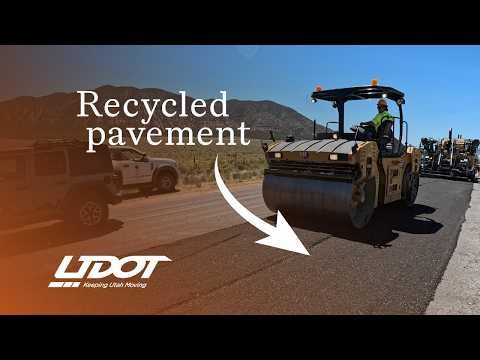
A Utah Department of Transportation official described a large cold‑in‑place recycling project that will reuse about 90% of existing pavement across roughly 35 lane miles, saving an estimated $5 million versus traditional fixes while cutting construction time and greenhouse emissions.
A Utah Department of Transportation official described cold‑in‑place recycling (CIR) as a method to rehabilitate worn highways by reusing most of the existing pavement on site, reducing hauling, cost and construction time.
The official told attendees CIR involves removing the top layers of the roadway, mixing them with rejuvenating oils on site and placing the material back. "Cold in place recycle gives UDOT a good tool," the official said, adding that "90% of the material that's here is being reused in the process." The presenter said the process allows crews to go "3 to 4 in" deeper into the pavement structure to restore a better surface.
The presenter said the current CIR effort covers about 35 lane miles and will save "approximately about $5 million" compared with traditional resurfacing methods because it requires substantially less imported material and far less hauling. The official also said the approach reduces greenhouse‑gas emissions by "approximately 90%" because trucks do not need to move material off and back onto the roadway.
Officials emphasized traffic and road type determine suitability. High‑volume freeways such as I‑15 are often impractical for CIR because the work may require reducing traffic to one lane. The presenter identified lower‑volume connectors through central Utah (transcribed as "Cypio") as prime candidates where crews can limit lane closures and complete work faster.
The official estimated CIR shortens construction time by about 40%, reducing the time drivers spend in work zones. "Forty percent less time sitting in a construction zone is a win for everybody," the presenter said.
The presentation framed CIR primarily as a maintenance technique to stretch limited maintenance budgets, cover more lane miles and use fewer raw materials. The transcript contains no formal motions or votes on adoption; the remarks were presented as information about UDOT maintenance options.
No date, action items, or formal approvals were recorded in the provided transcript.