Get Full Government Meeting Transcripts, Videos, & Alerts Forever!
Get email alerts on the Special Education topic
No spam. Unsubscribe anytime.
School Committee approves in‑district K–8 therapeutic program to curb out‑of‑district placements
Summary
The Marlborough School Committee voted to approve a K–8 therapeutic special‑education program to be housed at Hildrith, aiming to reduce costly out‑of‑district placements and provide intensive supports to return students to their home schools.
The Marlborough School Committee voted April 28 to approve a K–8 therapeutic special‑education program to be located at Hildrith, a step administrators described as designed to keep students with high support needs in the district.
The program, introduced by Mr. O'Brien and John Fletcher, director of special education, is being presented as a smaller, highly therapeutic setting for students whose IEP teams determine that in‑building supports have been exhausted. Administrators said 15 K–8 students were placed out of district between 2022 and 2025, and that 10 students have left the district this year with three more on a waiting list — evidence, they said, of limited options locally.
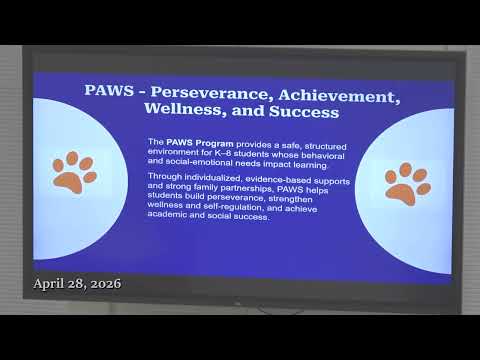
"The PAUSE program stands for perseverance, achievement, wellness, and success," Mr. O'Brien said, describing plans for intensive, evidence‑based behavioral and academic supports, daily therapeutic blocks and continuous progress monitoring aimed at returning students to their home schools when appropriate.
Administrators outlined a staffing model that would include a BCBA, two school adjustment counselors, six special‑education teachers (one per classroom), up to 12 paraprofessionals, nursing and related supports, and suggested many positions are drawn from existing district allocations. Class sizes were described as legally allowed up to 12 students but with an operational target of about eight per classroom because of needs and interactions among students.
The proposed schedule would start student arrival at 8:55 a.m., feature morning routines, academic blocks using district‑aligned HMH curricula for ELA and math and age‑appropriate materials for social studies and science, therapeutic instruction during recess and lunch, and an end‑of‑day check in to rate daily goals. The administration said staff would hold standing weekly meetings to review referrals and progress and use baseline and ongoing data in domains including behavioral regulation, social skills, academic engagement and crisis management.
Committee members pressed administrators on family engagement, EL supports, transportation and budget impacts. Mr. O'Brien said the district plans parent workshops, ongoing daily and weekly communication with families (including behavior sheets and monthly progress meetings), and that special‑education transportation could be covered within existing special‑education funding lines. On English‑learner services he said supports would be scheduled from existing EL staff or brought back to the committee if additional FTEs were required.
Administrators said they plan to pursue an application with DESIE for a public day special‑education school and aim to identify staff by June 1, order curriculum and supplies in June, and hold summer planning sessions in July and August. The start date remains contingent on that approval.
A motion to approve the K–8 Hildrith therapeutic program was made and seconded; school committee members voted in favor and the motion carried. The transcript does not record the names of the motion maker, seconder or a roll‑call tally. Committee members asked for regular implementation updates.
The program materials and discussion emphasize that the program is for students with active IEPs and that an IEP team (IP team) must determine eligibility; students already placed out of district may be offered a path to return to Marlborough if the in‑district program better meets their needs.
"Once they go out, they never come back," one administrator said, framing the policy and fiscal rationale for an in‑district option.
The committee also asked that administrators consider changing the PAUSE name to avoid confusion with existing programs at Wickham and to ensure families understand that this is an in‑district, therapeutic option rather than an exclusionary placement.
Next procedural steps include work on the DESIE application, staff recruitment and onboarding, and periodic reporting to the school committee on enrollment and early outcomes.