Get Full Government Meeting Transcripts, Videos, & Alerts Forever!
Get email alerts on the Land Use topic
No spam. Unsubscribe anytime.
Calera planning commission denies rezoning for proposed concrete plant after residents object
Summary
After a public hearing in which residents cited health, traffic and property-value concerns, the Calera Planning Commission voted to deny a request to rezone parcels along Highway 25 to M2 (heavy industrial) for a proposed ready‑mix concrete plant. The applicant said the operation would be small, run limited hours and use dust‑recycling controls.
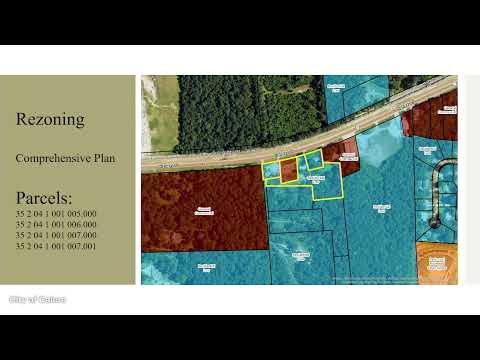
Calera — The Calera Planning Commission on [date not specified] denied a request by the applicant identified on the agenda as Mr. Dalgo to rezone several parcels along Highway 25 from E1/B2 to M2 (heavy industrial), after residents raised health, noise, traffic and property‑value concerns during a public hearing and commissioners cited the comp plan and spot‑zoning risks.
The hearing drew more than a dozen public commenters. Chris Nelson, who identified himself as a city resident, opposed the rezoning and provided documents he said include a lawsuit and a court record concerning the applicant. Residents living near the site and parents who use nearby fields and park facilities said a concrete plant would expose children and elderly neighbors to fine dust and diesel exhaust, increase heavy‑truck traffic on Highway 25 and depress home values.
"Concrete dust is very very fine and it affects respiratory health in children," said Tracy Host, who lives on Dunmore Drive; she urged the commission to reject the rezoning because she said the plant site would back up to neighborhood homes and recreational fields.
In response, the applicant (identified in the agenda as Mr. Dalgo) told the commission the operation would be small and phased in. "Our intentions are to only run up to 120 yards a day," he said, and estimated initial truck trips at about 8–10 per day. He said planned hours would generally be about 6:00 a.m. to mid‑afternoon so that trucks would not be traveling on Highway 25 after about 1:00 p.m. and that new plants use EPA‑style systems that recycle dust back into silos. He also said the business would hire locally, quoted wage ranges for positions, and presented an estimated local tax revenue figure.
Commissioners focused on the city's comprehensive plan future‑land‑use map (the commission described the parcels as shown for low residential use on the map) and on the lasting effect of rezoning to M2. One commissioner said that once property is rezoned to M2 it remains M2 and the city loses control over future industrial uses at the site; another said controlling all dust emissions is difficult even with mitigation. Those concerns, combined with the community testimony about proximity to homes, school traffic and recreation areas, framed the commission's decision.
A motion to deny the rezoning request was made and seconded; the commission approved the motion by voice vote. The transcript does not record a roll‑call tally or the full names of the motion sponsor and seconder. The meeting adjourned after the vote.
The agenda materials and public submissions presented at the hearing, including the comp plan map cited by commissioners and the documents provided by commenters, were retained by the planning office as part of the record. The commission did not approve any zoning change at this meeting; any future application would require a new filing and additional public notice.