Get Full Government Meeting Transcripts, Videos, & Alerts Forever!
Get email alerts on the Housing Investor Ordinance topic
No spam. Unsubscribe anytime.
Knox County staff refine ordinance to curb large-scale investors buying single-family homes; first reading set for July 27
Summary
A Knox County commissioner circulated a draft ordinance to limit purchases of single-family homes by large-scale, out‑of‑state investors, with exemptions for local owners and build‑to‑rent projects; staff raised enforcement and data‑reporting challenges and members debated a 100‑home threshold.
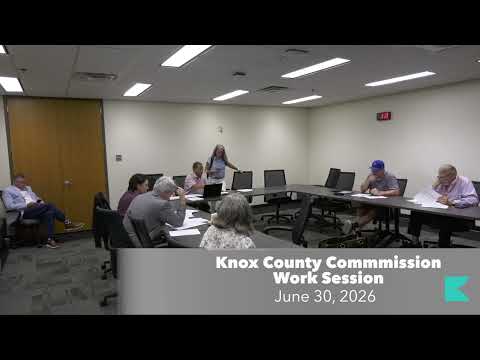
A Knox County commissioner on Tuesday presented a draft ordinance aimed at limiting purchases of single‑family detached homes by large-scale institutional investors, saying the measure is intended to set “guard rails” for local growth rather than punish neighborhood landlords.
The draft would bar entities that meet the ordinance’s ownership threshold from buying additional single‑family homes for rental purposes, while carving out exemptions for owners domiciled in Tennessee, certain build‑to‑rent projects, and locally owned landlords. The presenter said the ordinance includes an 80% affordable‑housing provision and a market‑cap test aimed at very large firms.
County staff and commissioners spent the meeting focused on several practical and legal questions. Staff warned county databases do not reliably distinguish single‑family detached homes from accessory dwelling units or duplexes and that changes in assessor records do not always appear until January, making real‑time identification difficult. One staff member noted the assessor data and property classification processes mean staff could run quarterly reports but could miss near‑term bulk purchases because ownership updates lag the deed transfers.
Commissioners debated the draft’s grandfather clause and acquisition limits. Under the current draft, owners above the threshold at the ordinance’s effective date would be treated differently from future purchasers; members asked whether owners who fall under the threshold could nevertheless acquire additional homes without becoming subject to the ordinance. The presenter confirmed new construction intended for rent would generally be excluded from the purchase cap as written.
A recurring enforcement concern centered on the ordinance’s use of an "intent" standard — for example, language that treats a purchase as covered if the buyer "intends to rent" within 12 months. Several participants argued intent is difficult to prove and suggested replacing it with observable triggers such as actual rental activity, since enforcement relying on buyers’ state of mind would be hard to sustain.
The draft also includes a market‑cap exemption (discussed as a $1 billion threshold in the meeting), intended to flag very large institutional investors, and affiliate language to account for companies that operate through multiple LLCs. Counsel and staff acknowledged those provisions will complicate enforcement and will require deeper review to prevent evasions via shell entities.
Realtors and a commission member flagged a section that creates a private right of action allowing individuals who were "outbid" to sue institutional buyers. Participants argued the provision needs clearer standards — for example, a requirement that outbids must exceed a fair‑market or reasonable value benchmark — because otherwise the clause could invite frivolous litigation.
Tax classification also drew attention. Staff explained that contiguous, income‑producing rental developments are often assessed at commercial rates and that the line between residential and commercial tax treatment is unsettled and likely to be shaped by state appeals and court rulings. Commissioners asked staff to monitor state legislative changes and pending appellate decisions that could affect enforcement and classification locally.
Members also discussed the ordinance’s threshold. The presenter said she chose a 100‑home cutoff based on an earlier state bill and that a larger federal threshold (350 homes) would be too broad for Knoxville. Several attendees suggested softening the ordinance’s “whereas” findings that claim institutional purchases are already common, recommending more cautious language that expresses concern rather than asserting unproven facts.
The ordinance was not voted on. The presenter said she will post a clean draft and bring the measure back for first reading on July 27; a second reading would follow in subsequent meetings unless the commission postpones the schedule.
The meeting closed with staff agreeing to refine definitions, review reporting options to identify owners, and revisit the intent, private‑action and market‑cap provisions before the ordinance is posted for the next agenda.