Get Full Government Meeting Transcripts, Videos, & Alerts Forever!
Get email alerts on the Public Health topic
No spam. Unsubscribe anytime.
ATSDR presenter outlines how computational modeling informs chemical‑exposure response
Summary
A presenter from the Agency for Toxic Substances and Disease Registry described how the agency's Simulation Science Section uses computational models—PBTK, benchmark dose, SAR and fate‑and‑transport—to estimate exposures, support emergency response and reduce testing burdens, citing a methylmercury scenario and PFAS in drinking water.
A presenter from the Agency for Toxic Substances and Disease Registry (ATSDR) described how the agency’s Simulation Science Section uses computational modeling to support public‑health research and emergency response.
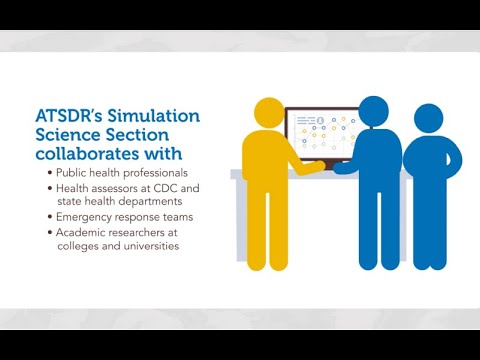
The presenter said the section has applied innovative modeling techniques for more than 30 years and collaborates with CDC health assessors, state health departments, emergency responders and academic researchers to estimate exposures and potential health effects.
According to the presenter, computational modeling combines multiple data streams and mathematical methods to estimate what might happen in specific exposure situations. The presenter listed four principal model types used by the section: physiologically based toxicokinetic (PBTK) models that predict how chemicals are absorbed, distributed, metabolized and excreted; benchmark dose models for deriving health guidance values; structure–activity relationship (SAR) models for inferring toxicity of poorly characterized substances; and fate‑and‑transport models (including water models) that map chemical movement through air, soil and water.
The presenter offered two examples of how modeling can be used in practice. In a hypothetical massive methylmercury release to a river, the section could model methylmercury fate and transport in drinking water, estimate potential health effects for downstream consumers and produce a toxicity profile to inform response. The presenter also noted that PBTK modeling can be applied to estimate blood concentrations resulting from environmental exposure to PFAS in drinking water.
The presenter argued modeling yields practical benefits: it can produce insight more quickly than laboratory testing, reduce the cost and time of experiments, and allow assessors to screen large numbers of substances to prioritize which require deeper study. Another advantage the presenter cited is that modeling can generate reliable data without using human subjects or laboratory animals, which is useful for hypothetical or hard‑to‑recreate scenarios.
The presenter said emergency responders and health professionals turn to the Simulation Science Section for data during natural disasters and other emergencies to make prompt decisions that protect health. For those interested in collaboration or using ATSDR modeling capabilities, the presenter provided an email for the Simulation Science Section chief (atsdr_sss@cdc.gov) and a short URL for more information (t.cdc.gov/SimSci).